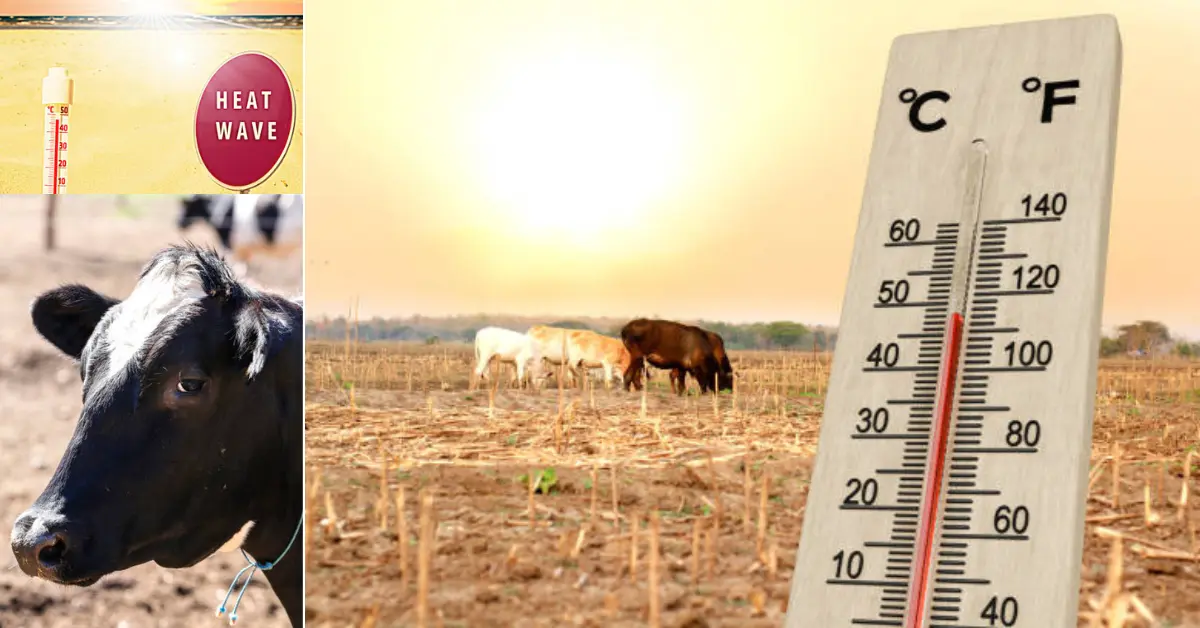
Introduction: Is Your Animal Safe in Today’s Heat?
I want you to think about last summer. Did your cow’s milk drop in the hottest weeks? Did your buffalo stop eating as much? Did your poultry flock lose birds on particularly hot days? If yes; your animals were telling you something important, and most farmers never catch it until the financial damage has already been done.
Heat stress in livestock is one of the most financially damaging and least visible problems in farming today. Unlike a disease, it produces no obvious symptom you can point to. It produces a slow, silent loss of milk, of weight gain, of conception rates that shows up only when you count your monthly income and wonder where it went.
This Livestock Heat Stress Index Calculator uses the internationally standardised Temperature-Humidity Index (THI) to give you a precise, science-based reading of how much thermal stress your animals are experiencing right now and exactly what to do about it. It covers 12 animal species, 6 stress levels, and 3 breed sensitivity categories.
🌡️ Livestock Heat Stress Index (THI) Calculator
Step 1 — Select Your Animal
Step 2 — Enter Temperature & Humidity
THI Stress Level Reference — All Animals
| Animal | Comfort Zone | Mild Stress | Moderate Stress | Severe Stress | Danger Zone | Most Sensitive |
|---|
What Is the Temperature-Humidity Index (THI)?
THI is a single number that combines air temperature and relative humidity to express the real heat load experienced by an animal. It was first developed for dairy cattle in the 1960s and has since been validated for all major livestock species through decades of research at universities and animal science institutions worldwide.
Temperature alone does not tell the full story of heat stress. At 32°C with 30% humidity, the THI is around 76 moderate stress for dairy cows. At 32°C with 85% humidity, the THI is above 88 severe stress. The temperature is identical, but the animal’s ability to cool itself has completely changed because of humidity.
| THI Formula: THI = (1.8 × T + 32) − (0.55 − 0.55 × RH) × ((1.8 × T + 32) − 58) where T = temperature in °C, RH = relative humidity as a decimal (e.g. 0.70 for 70%). |
You do not need to calculate this manually. The tool calculates THI instantly. Understanding the formula simply helps you see why a small rise in humidity on a hot day can shift your animals from moderate to severe stress.
How to Use This Calculator
The tool takes less than one minute to use:
- Select your animal from the grid- Dairy Cow, Buffalo, Goat, Sheep, Pig, Horse, Poultry, Rabbit, Camel, or any of the 12 species covered.
- Toggle between °C and °F using the unit selector at the top.
- Enter the current air temperature in the shade not in direct sunlight.
- Enter the relative humidity in percent. Check your local weather app or use a basic digital thermometer-hygrometer.
- Select the breed category Indigenous/Local breeds tolerate heat better; High-Yielding breeds are most sensitive.
- Click Calculate Heat Stress. Your THI, stress level, estimated production loss, expected effects, and recommended actions appear instantly.
| Tip: Check THI twice daily once at peak afternoon heat and once in the evening. If THI stays above 72 even at night, animals cannot recover from daytime stress, and cumulative heat stress builds up over several consecutive days. |
THI Stress Level Quick Reference Major Livestock Species
Use this table as a quick field reference for all major species covered in this tool.
| Animal | Mild Stress | Moderate | Severe | Danger / Critical |
| Dairy Cow | <72 | 72–80 | 80–90 | >90 |
| Buffalo | <72 | 72–79 | 79–88 | >88 |
| Goat / Sheep | <76 | 76–84 | 84–90 | >90 |
| Pig | <72 | 72–79 | 79–85 | >85 |
| Poultry | <72 | 72–78 | 78–83 | >83 |
| Horse | <78 | 78–85 | 85–90 | >90 |
| Rabbit | <68 | 68–75 | 75–82 | >82 |
| Note: Values shown are for Crossbred / Improved breeds. Indigenous / local breeds tolerate THI approximately 3 points higher. High-yielding breeds reach stress at values approximately 3 points lower. |
Proven Cooling Methods What Works and What Doesn’t
1. Sprinkler + Fan Combination Most Effective
This is the gold standard confirmed by research worldwide. Water sprayed directly onto the animal’s skin, followed immediately by airflow from fans, cools through forced evaporation. This method reduces body temperature by 1.5–2.5°C within 30 minutes. The cycle is: 30 seconds of spray, then 4–5 minutes of fans only repeated throughout the hottest hours of the day.
2. Shade Essential but Not Sufficient Alone
Shade reduces radiant heat load and can reduce effective THI by 3–5 points in open outdoor conditions. However, shade without ventilation traps warm, humid air and can worsen conditions inside closed sheds. Shade must always be paired with airflow to be effective.
3. Wallow / Water Bath for Buffalo
Buffalo have significantly fewer sweat glands than cattle and depend entirely on external wetting to cool down. A wallow pond or a concrete area where water can be applied and retained is a biological necessity for buffalo not a luxury. Without it, even moderate THI readings can cause serious stress.
4. Fans Alone Useful in Dry Conditions Only
Fans improve evaporative cooling effectively when humidity is below 50%. When humidity is 70–90% typical in summer and monsoon-adjacent seasons globally fans alone are insufficient for animals above the moderate stress threshold. They must be combined with water application.
5. Feeding Time Management
Digestion generates significant internal heat. Shifting the majority of daily feed especially concentrate and grain to evening and early morning allows this metabolic heat to dissipate during cooler overnight hours rather than adding to daytime heat load. This simple management change consistently improves animal comfort during heat stress periods.
6. Electrolyte Supplementation
Animals under heat stress lose sodium, potassium, and chloride through increased salivation and urination. This electrolyte imbalance amplifies heat stress effects and further reduces feed intake and production. Adding electrolyte powder to drinking water during high-stress periods supports normal body function and helps maintain production levels.
Frequently Asked Questions
Q1: Why does humidity matter as much as temperature for livestock?
Animals cool themselves through evaporation breathing out warm air and releasing heat through the skin. When humidity is high, evaporation slows significantly because the air is already saturated with moisture. A temperature of 32°C with 30% humidity produces a THI of about 76 moderate stress for cattle. The same 32°C with 85% humidity produces a THI above 88 severe stress. The temperature is identical but the animal’s ability to cool itself has collapsed entirely. This is why THI is the correct measurement for heat stress temperature alone misses the critical humidity factor.
Q2: At what THI does milk production start to drop in dairy cows?
Research consistently shows that dairy cows begin losing milk production when THI exceeds 68 for breeds, or 72 for crossbred animals. For every THI point above these thresholds, milk yield declines by approximately 0.2–0.4 kg per cow per day. At moderate stress (THI 76–80), a herd of 20 cows can lose 60–100 litres of milk per day. At severe stress, losses can reach 25–35% of total daily production a significant and often invisible financial cost that accumulates over weeks.
Q3: Is buffalo more or less heat-sensitive than cattle?
Buffalo are more sensitive to heat stress than crossbred cattle, despite a common misconception to the contrary. Buffalo have fewer sweat glands per unit of skin area compared to cattle, and their dark coat absorbs more solar radiation. They depend heavily on external water wallowing or sprinklers to regulate body temperature. This is why access to water for wetting is not optional for buffalo in hot weather; it is a biological necessity. The THI thresholds for buffalo are set slightly lower than for cattle in this tool to reflect this higher sensitivity.
Q4: Why do poultry die so quickly in summer heat?
Poultry cannot sweat at all. They lose heat entirely through panting and by holding their wings away from their body to expose less-feathered skin. In a closed or poorly ventilated shed, when ambient THI rises above 83, the internal temperature can be several degrees higher. Broilers can die within 2–3 hours if fans stop working on a hot day. This is why uninterrupted ventilation is the single most critical factor in summer poultry management it is not a convenience but a survival requirement.
Q5: What is the single most effective way to cool dairy cattle?
The combination of water sprinklers and fans is the most effective and well-researched method for cooling dairy cattle. Water applied directly to the animal’s skin, evaporated immediately by airflow from fans, can reduce body temperature by 1.5–2.5°C within 30 minutes. The recommended cycle is 30 seconds of sprinkler spray followed by 4–5 minutes of fan-only operation repeated throughout the hottest hours of the day. Shade alone or fans alone are significantly less effective, particularly when humidity is high.
Related Tools on
Use these free tools alongside the Heat Stress Index Calculator:
- Dairy Feed Calculator– Adjust daily feed rations when intake drops during heat stress
- Livestock Weight Estimator– Track weight changes to detect the impact of summer heat on your herd

Disclaimer
The THI thresholds and stress classifications in this tool are based on internationally published livestock research, including Armstrong (1994), USDA livestock heat stress guidelines, and peer-reviewed studies published in animal science journals. Actual onset and severity of heat stress varies depending on breed acclimatisation history, body condition, coat colour, solar radiation, housing ventilation, and individual animal health. This tool is for planning and early warning purposes only. Always consult your local veterinarian or livestock extension officer for clinical decisions.
Source: National library of Medicine
Conclusion: The Heat You Cannot See Is the Heat That Costs You Most
Heat stress does not announce itself. It produces no sick animal you can point to, no disease you can treat overnight. It produces a quiet, monthly erosion of your farm’s productivity in milk never produced, in pregnancies never established, in weight gain never achieved.
The THI gives you visibility into a problem that would otherwise stay invisible. Check it on every hot day. Act before you see symptoms, not after. The difference between a farm that manages heat stress and one that doesn’t is not equipment it is awareness.
About the Author
Lalita Sontakke is the founder of Precision Agriculture Calculators, a global agriculture-focused platform offering 53+ free tools and calculators for farmers, agronomists, and agricultural professionals worldwide. Her mission is to make precision farm management accessible to every farmer free, practical, and available from any device, anywhere in the world.
wow! great going keep it up