Introduction
Rain falls on your roof and runs off into the ground.
That’s free water leaving your farm every time it rains.
Most farmers in water-stressed regions spend money pumping groundwater from borewells or buying water from tankers, while thousands of litres from their own roof flow away unused every monsoon or rainy season.
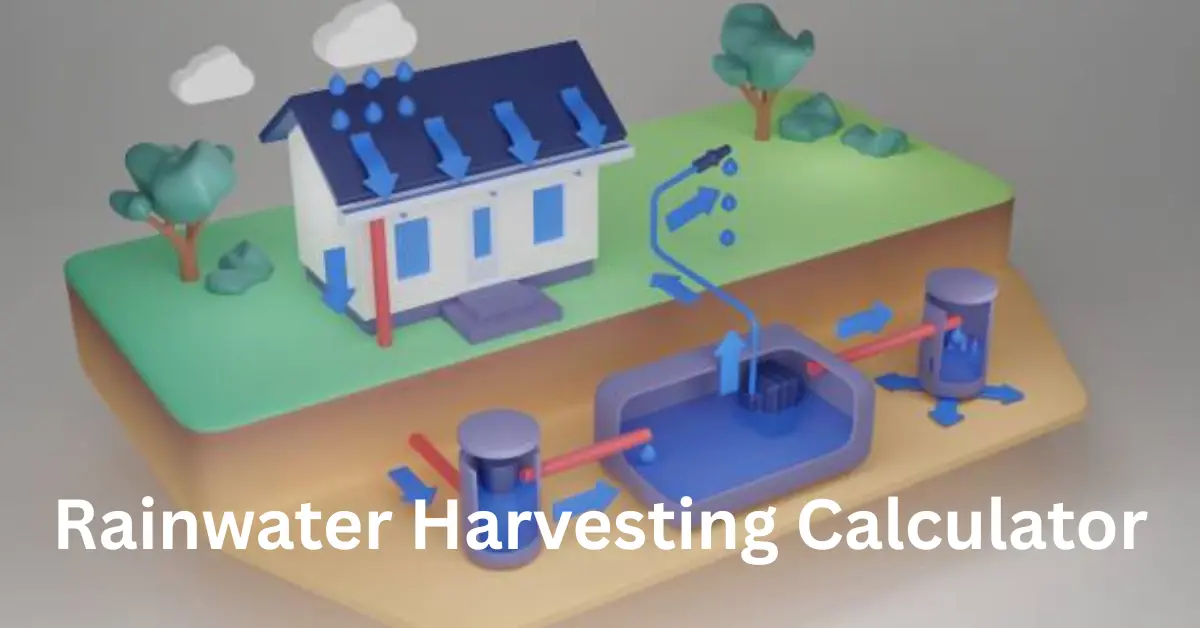
Rainwater harvesting is the practice of capturing that water before it runs off, storing it, and using it for irrigation, livestock, household needs, or groundwater recharge.
But before you invest in gutters, pipes, tanks, or storage ponds, you need one critical number: how much water can your roof actually collect?
That’s what the Rainwater Harvesting Calculator on moralinsights.com answers.
You enter your roof dimensions, your roof material, your annual rainfall, your filter loss percentage, and your storage tank capacity. The calculator gives you the total annual harvestable water in litres and cubic metres, average daily harvest, irrigable crop area, tank fill count per year, and a month-by-month breakdown if you enter your rainfall distribution.
It takes two minutes. It gives you the numbers you need to decide whether a rainwater harvesting investment makes sense for your farm.
Enter what percentage of annual rain falls each month. Must total 100% for the breakdown to appear.
Your Rainwater Harvest Results — moralinsights.com
💡 Recommendations & Agronomic Tips
⚠️ Disclaimer
This Rainwater Harvesting Calculator is provided by MoralInsights.com for general educational and informational purposes only. The results generated are estimates based on standard hydrological formulas and user-provided inputs. Actual water harvest quantities may vary significantly depending on local weather patterns, roof condition, gutter efficiency, seasonal variation, evaporation losses, sediment and debris accumulation, and other site-specific factors not accounted for in this tool.
MoralInsights.com does not guarantee the accuracy, completeness, or fitness of these results for any specific agricultural, construction, or water-management project. This tool is not a substitute for professional engineering advice. For large-scale rainwater harvesting systems, storage tank sizing, or farm infrastructure decisions, always consult a qualified water resource engineer, agronomist, or local government water authority.
By using this tool, you agree that MoralInsights.com and its authors bear no liability for any losses, damages, or decisions made based on the outputs of this calculator.
Why Rainwater Harvesting Is One of the Most Important Farm Investments
Water scarcity is the defining agricultural challenge of the 21st century.
According to the Food and Agriculture Organization of the United Nations (FAO), over 2 billion people live in countries experiencing high water stress, and agriculture accounts for about 70 percent of all water withdrawals globally. In many developing regions, groundwater tables are falling as pumping exceeds natural recharge rates.
Rainwater harvesting addresses this problem from the opposite direction: instead of extracting more water from the ground, you capture and store the water that nature delivers for free.
Here’s why every farmer should at least calculate their potential:
- It’s completely free water. Rain costs nothing. The only investment is in the collection and storage infrastructure. Once that’s built, every litre you harvest replaces a litre you would have pumped or purchased.
- Rooftop water is cleaner than surface runoff. Water collected from a roof avoids soil contact and the pathogen contamination that comes with surface water harvesting. With a simple first-flush diverter and basic filtration, rooftop rainwater is suitable for irrigation, livestock, and in many cases household use.
- It reduces borewell dependency. Every litre stored from rain is a litre saved in your aquifer. In areas with declining water tables, this is not just an economic benefit but a long-term sustainability necessity.
- The potential is larger than most farmers expect. A metal-roofed farm building of 20 metres by 10 metres in a region receiving 800 mm of annual rainfall can collect approximately 144,000 litres of harvestable water per year. That’s 144 cubic metres. Enough to irrigate a small vegetable garden through a dry period.
Research published through the USGS Water Resources Research and promoted by international development agencies confirms that household and farm-scale rooftop rainwater harvesting systems are economically viable across a wide range of rainfall zones when properly designed and maintained.
The Formula Behind the Calculator
The Rainwater Harvesting Calculator uses the globally accepted standard formula for estimating harvestable water from a roof catchment.
Harvestable Water (litres) = Roof Area (m2) x Annual Rainfall (metres) x Runoff Coefficient x (1 minus Filter Loss Fraction) x 1,000.
Each component has a specific meaning:
- Roof Area (m2): The horizontal projected area of your roof. For a flat roof, this is simply length times width. For gable and hip roofs, the horizontal projection is still length times width because rainfall is measured as vertical depth, not slope distance.
- Annual Rainfall (converted to metres): Your local annual rainfall in millimetres divided by 1,000 to convert to metres. A region with 800 mm annual rainfall uses 0.8 metres in the formula.
- Runoff Coefficient: The fraction of rainfall that actually runs off the roof surface and into your collection system. Metal roofs have a coefficient of 0.90 meaning 90 percent of rainfall is collected. Thatch roofs absorb water and have a coefficient as low as 0.40.
- Filter Loss Fraction: The percentage of collected water lost through the first-flush diverter (which discards the initial dirtiest flow) and any filtration system. Typically 10 to 15 percent.
- x 1,000: Converts cubic metres to litres.
What Does the Calculator Ask You to Enter?
Step 1: Roof Shape
Four roof shape options: Flat or shed roof, Gable (A-frame), Hip roof, and Known Area.
For flat, gable, and hip roof shapes, you enter length and width. For all three, the calculation uses the horizontal projected area (length x width) rather than the actual sloped surface area. This is correct because rainfall is measured as vertical depth.
For the Known Area option, you enter your total collection area in square metres directly. Use this if you’ve already measured your roof area or if you have an irregular roof footprint.
Step 2: Roof Dimensions
Enter length and width in metres for your roof. For irregular shapes, estimate the average length and width and multiply to get an approximate area.
For multiple connected buildings, measure each separately and add the areas together. Enter the total as a Known Area in square metres.
Step 3: Rainfall and System Details
- Annual Rainfall (mm/year): Your local average annual rainfall in millimetres. Find this from your national meteorological service, local weather station records, or search your district or region name plus average annual rainfall. You can also use the NASA POWER climate data portal for any location on Earth.
- Roof Material: Six options with their standard runoff coefficients. Metal or tin sheet at 0.90 is the most efficient. Concrete at 0.85. Clay or ceramic tiles at 0.80. Asphalt shingles at 0.75. Slate at 0.70. Thatch or grass at 0.40. You can override the auto-filled coefficient with any custom value.
- Runoff Coefficient: Auto-filled when you select roof material. Override if your roof is in unusually poor condition or if you have measured data from your specific roof.
- Filter and First-Flush Loss (%): Typically 10 to 15 percent. A first-flush diverter automatically discards the first flow of water from each rain event, which carries dust, bird droppings, and accumulated debris. This makes the stored water significantly cleaner. The water discarded in this process is your filter loss.
- Storage Tank Capacity (litres): Optional. Enter your existing or planned tank size. The calculator tells you how many times per year your annual harvest would fill that tank.
Step 4: Monthly Rainfall Distribution
Optional but very useful. Enter what percentage of your annual rainfall falls in each month. The percentages must add up to 100 percent.
When the monthly distribution is complete, the results show a month-by-month harvest table with rainfall in millimetres, harvestable water in litres, and a visual proportion bar for each month.
Use the Distribute Evenly button to quickly set 8.33 percent per month as a starting point, then adjust for your actual seasonal pattern.
This monthly breakdown is essential for sizing your storage tank correctly. You need enough storage to bridge the dry months between major rainfall events.
What Do Your Results Show You?
Total Annual Harvestable Water
The headline number. Your total annual harvestable water in litres, with a conversion to cubic metres.
This is the maximum water your roof system can deliver in a year under your rainfall conditions, after runoff efficiency and filter losses. It’s the number you use to evaluate whether rainwater harvesting can meaningfully supplement your water supply.
Six Key Statistics
Six cards show: Collection area in m2, Gross rainfall volume (before losses), Average daily harvest in litres, System losses in litres, Tank fill count per year (if tank size entered), and Irrigable crop area in square metres.
Irrigable area is calculated assuming a crop water need of 5 mm per day and uses the number of rainy days to estimate how long the harvest can sustain irrigation. This is a rough planning figure showing the crop area your annual harvest could support.
Tank Fill Bar
If you entered a storage tank capacity, a visual bar shows how many times your annual harvest fills the tank.
Less than one fill per year is a warning: your harvest is smaller than your tank. You may need a smaller tank or more collection area.
More than 8 fills per year is an overflow warning: your tank capacity is likely too small relative to your harvest potential. You’re probably losing water through the overflow during peak rain months.
Month-by-Month Harvest Table
When monthly percentages are entered, a table shows each month’s rainfall in millimetres and harvestable water in litres. A mini bar chart in the table shows proportional harvest across months.
This is your seasonal planning tool. It shows which months produce the most water and which months are dry. The gap between your peak harvest months and your irrigation demand months is what your storage tank must bridge.
Recommendations and Tips
A dynamic set of tips generated based on your inputs. If your runoff coefficient is below 0.75, the tip suggests upgrading to metal or concrete roofing. If your filter loss is above 15 percent, it suggests a quality first-flush diverter. If your rainfall is below 500 mm, it recommends aggressive storage strategy. If you’re in a high-rainfall region above 1,500 mm, it recommends multi-tank setups or farm ponds.
What Makes This Calculator Practical
Four Roof Shapes
Most online rainwater calculators only handle rectangular flat roofs. This tool covers flat and shed roofs, gable roofs, hip roofs, and a custom known-area option for any irregular shape.
For gable and hip roofs, the horizontal projected area (footprint) is used correctly, not the sloped surface area. This is the scientifically correct approach because rainfall volume is calculated from horizontal collection area.
Material-Specific Runoff Coefficients
Different roof materials shed water very differently. A thatch roof absorbs a large fraction of rainfall and runs off less than half of what hits it. A metal roof sheds over 90 percent.
Selecting your actual roof material auto-fills the appropriate coefficient. This difference can mean 50 percent more or less harvestable water for the same roof area in the same rainfall.
First-Flush Loss Accounting
The first-flush effect is one of the most important but least understood factors in rainwater harvesting quality management.
The first rain to fall on a roof after a dry period washes off accumulated dust, bird droppings, pollen, and other contaminants. A first-flush diverter automatically redirects this initial volume away from your storage tank.
This tool explicitly accounts for first-flush loss so your harvest estimate reflects what actually reaches your storage, not the theoretical maximum from the roof.
Monthly Distribution for Seasonal Planning
A single annual figure doesn’t help you size your storage tank. What matters is how rainfall is distributed across months.
If 70 percent of your rainfall comes in 3 months (a typical tropical monsoon pattern), your tank must be large enough to store peak-month harvest for use through the 9 dry months. The monthly breakdown makes this visible and quantifiable.
Irrigable Area Estimate
Turning litres of stored water into irrigable crop area is the most practically useful translation of the result.
The irrigable area estimate assumes a 5 mm per day crop water need, which is typical for vegetables and field crops. It helps you immediately understand whether your annual harvest is enough to supplement a kitchen garden, a small cash crop, or a larger field.
Who Benefits Most from This Tool?
- Farmers in Water-Stressed Regions: Any farmer in a region with irregular rainfall, falling groundwater, or expensive water supply can use this tool to quantify the potential benefit of capturing rooftop rainwater before investing in infrastructure.
- Farmers Planning New Farm Buildings: If you’re building a new shed, barn, greenhouse, or processing facility, calculating rainwater potential before construction lets you design gutters, collection pipes, and first-flush systems into the building from the start. Retrofitting is always more expensive.
- Rural Households with Home Gardens: Even a small 5 x 8 metre house roof in a 600 mm rainfall region can collect 20,000 to 25,000 litres per year. That’s enough to water a significant kitchen garden through the dry season.
- NGOs and Development Organisations: Community development workers introducing rainwater harvesting in drought-prone areas can use this tool to quickly calculate potential for each household or farm building they’re working with.
- Agricultural Engineers and Water Resource Planners: A rapid estimation tool for preliminary assessment before detailed engineering design. The formula and coefficients used are standard hydrological parameters.
- Schools and Agricultural Training Institutions: The formula, the runoff coefficient concept, and the seasonal distribution all make this an excellent practical teaching tool for water management courses.
Step-by-Step: How to Use the Rainwater Harvesting Calculator
Here’s a complete example. You have a metal-roofed farm shed 20 metres long and 10 metres wide. Your annual rainfall is 800 mm. You want to know how much water you can collect and whether a 5,000-litre tank makes sense.
- Open the Rainwater Harvesting Calculator on moralinsights.com.
- Select Flat/Shed as Roof Shape.
- Enter Roof Length as 20 and Width as 10.
- Enter Annual Rainfall as 800.
- Select Metal/Tin Sheet as Roof Material. Runoff coefficient auto-fills to 0.90.
- Keep Filter Loss at 10 percent (standard first-flush loss).
- Enter Storage Tank as 5000 litres.
- Click Distribute Evenly to set equal monthly distribution, or enter your actual monthly percentages.
- Click Calculate Rainwater Harvest.
Here’s what the results show:
- Roof area = 20 x 10 = 200 m2.
- Gross rainfall volume = 200 x 0.800 x 1,000 = 160,000 litres.
- After runoff coefficient = 160,000 x 0.90 = 144,000 litres.
- After filter loss = 144,000 x (1 minus 0.10) = 129,600 litres.
- Annual harvestable water = approximately 129,600 litres (129.6 m3).
- Average daily harvest = 129,600 / 365 = approximately 355 litres per day.
- Tank fill count = 129,600 / 5,000 = approximately 25.9 fills per year.
That tank fill count of almost 26 fills per year is a clear signal: a 5,000-litre tank is far too small for this roof. It will overflow constantly during rainy months and run empty quickly during dry periods.
For a 200 m2 roof with 800 mm rainfall, a tank of at least 25,000 to 50,000 litres is more appropriate. The monthly breakdown shows you exactly how large the tank needs to be to store peak-month harvest for dry-month use.
For global guidance on rainwater harvesting system design, storage sizing, and water quality management, the FAO Natural Resources and Environment: Water Harvesting and the USGS Water Science School resources on precipitation and runoff are comprehensive globally available references. For local rainfall data, the NASA POWER climate portal provides free daily and annual precipitation data for any location on Earth.
Related Tools on MoralInsights.com
Use the Rainwater Harvesting Calculator alongside these tools for a complete water management plan:
- Water Storage Capacity Calculator — Calculate the correct tank, pond, or reservoir size to store your annual rainwater harvest for use through dry periods.
- Borewell Yield Estimator — Compare your rainwater harvest potential against your borewell yield to plan your combined water supply strategy.
- Irrigation Scheduling Calendar — Once you know your harvest volume, use this tool to plan how many days of crop irrigation it can support.
- Drip Irrigation Layout Calculator — Design a gravity-fed drip system powered by your elevated rainwater storage tank.
- Crop Water Requirement Calculator — Calculate your crop’s seasonal water demand and compare it to your annual rainwater harvest to find any supply gap.
- Evapotranspiration (ET) Calculator — Calculate daily crop water demand to refine the irrigable area estimate from your rainwater harvest.
- Mulching Sheet Calculator — Mulching reduces crop water demand by 25 to 30 percent. Plan your mulch alongside your rainwater system to maximize the irrigable area from your stored harvest.
Frequently Asked Questions
What is a runoff coefficient and why does it matter so much?
The runoff coefficient is the fraction of rainfall that actually becomes runoff and flows into your collection system. The rest is absorbed by the roof material, lost to evaporation, or splashed away.
A metal or tin sheet roof has a coefficient of 0.90, meaning 90 percent of rainfall hitting the roof becomes collectible water. A thatch roof has a coefficient of about 0.40, meaning only 40 percent runs off.
This difference is enormous. A thatch-roofed building collects less than half the water of the same-sized metal-roofed building in the same rainfall. If you’re planning a new collection system, roof material choice is one of the most impactful decisions you can make.
What is a first-flush diverter and do I need one?
A first-flush diverter is a simple device installed in your downpipe that automatically redirects the first volume of water from each rain event away from your storage tank.
The first water to flow off a roof after a dry period carries concentrated dust, bird droppings, pollen, insect debris, and atmospheric pollutants. Diverting this first flush dramatically improves the quality of water reaching your storage tank.
Yes, you need one. It’s one of the most cost-effective quality improvements in any rooftop rainwater system. A typical first-flush diverter diverts 10 to 25 litres per rain event. Set your filter loss percentage accordingly.
How do I find my local annual rainfall?
The best source is your national or regional meteorological service. Most countries publish historical average annual rainfall data by district or region.
Alternatively, the NASA POWER portal at power.larc.nasa.gov provides free daily precipitation data for any latitude and longitude on Earth. You can enter your farm coordinates and get historical average annual rainfall with no registration required.
Use a 10-year or longer average for the most reliable estimate. Single-year figures can be misleading in regions with high rainfall variability.
How large should my storage tank be?
The right tank size depends on your monthly rainfall distribution. You need enough storage to carry water from your wettest months through your driest months.
A simple rule of thumb: your tank should be large enough to store at least one to two months of peak harvest. In a monsoon region where 80 percent of rain falls in 4 months, this means storing a significant fraction of your annual harvest in those peak months.
Use the monthly distribution feature in this calculator to see how much water you harvest in each month and what gap exists in your dry months. That dry-month gap, in total litres, is your minimum storage requirement.
Can I use harvested rainwater for drinking?
Rooftop rainwater can be made safe for drinking with appropriate treatment including first-flush diversion, fine filtration (sand filter or ceramic filter), and disinfection (chlorination, UV treatment, or boiling).
Without treatment, rooftop rainwater is generally suitable for irrigation, toilet flushing, livestock, and garden use in most regions.
Regulations on rainwater use for drinking vary by country and region. Always check your local water authority guidelines before using harvested rainwater for drinking or food preparation.
Conclusion
Rain is one of the most underutilized resources on most farms. Every rainfall event delivers thousands of litres of free water onto your rooftops, and most of it flows away into the ground or drains without being captured.
The Rainwater Harvesting Calculator on moralinsights.com shows you exactly how much free water you’re missing. Enter your roof size, material, and local rainfall, and get a precise annual harvest figure, a tank sizing guide, a month-by-month breakdown, and practical recommendations tailored to your situation. Whether you’re in a high-rainfall tropical region or a semi-arid zone, calculating your potential is the first step to capturing it. Start with this calculator, size your storage correctly, and turn every monsoon into a water investment.
Disclaimer
The Rainwater Harvesting Calculator on moralinsights.com is provided for general educational and informational purposes only. Results generated are estimates based on standard hydrological formulas and user-provided inputs.
Actual water harvest quantities may vary significantly depending on local weather patterns, roof condition and slope, gutter efficiency, seasonal variation, evaporation losses from storage, debris accumulation, and other site-specific factors not accounted for in this tool. Runoff coefficients used are standard published values for each roof material type and may differ from your specific roof age and condition.
Annual rainfall should be based on a multi-year average rather than a single year’s figure. The irrigable area estimate assumes constant 5 mm/day crop water demand across the harvest period and is a rough planning indicator only. This tool is not a substitute for professional engineering assessment for large-scale rainwater harvesting system design.
For significant infrastructure investment including tanks, cisterns, pumps, and distribution systems, always consult a qualified water resource engineer or your local government water authority. The author and moralinsights.com accept no liability for water shortages, infrastructure failures, or investment losses arising from decisions made based on this calculator.
About the Author
Lalita Sontakke is the founder of moralinsights.com, a global agriculture-focused platform offering 53+ free tools and calculators for farmers, agronomists, and agricultural professionals worldwide. Her mission is to make precision farm management accessible to every farmer, free, practical, and available from any device, anywhere in the world.
Leave a Reply