Most farmers know composting is good for the soil. But here’s what stops many of them from actually doing it well: they don’t know how much material they need before they start.
You dig a pit. You throw in whatever dung and crop waste you have. You add some water. And then you hope for the best.
Sometimes it works. Often it doesn’t because the carbon-to-nitrogen ratio is off, there’s too little moisture, or the pit is half-empty and aerating poorly.
The result? Compost that takes forever, smells wrong, and doesn’t deliver the soil benefits you were counting on.
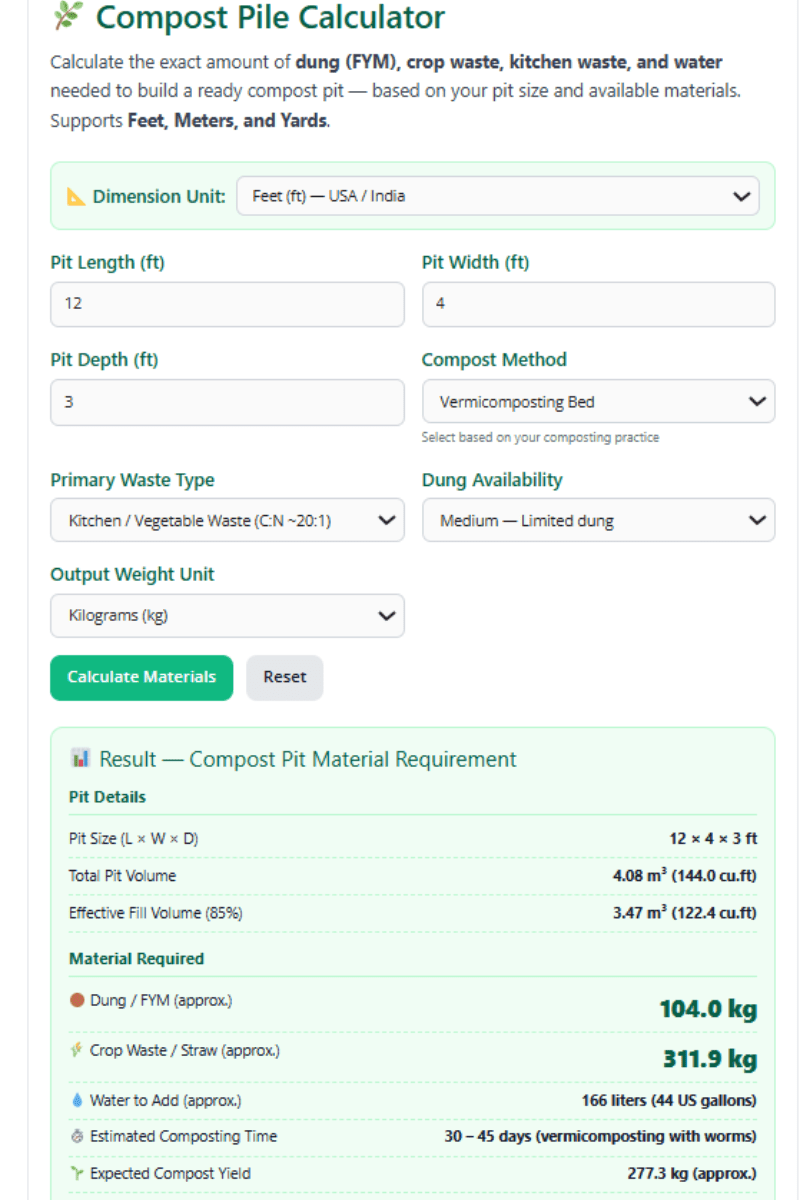
Compost Pile Calculator: Calculate the exact quantities of carbon-rich and nitrogen-rich materials needed to build a perfectly balanced compost pile. Free online compost calculator for farmers and home gardeners. Enter your available organic waste to get ideal C:N ratio, pile dimensions, water requirement, and compost output in tonnes.
That’s exactly the problem I wanted to fix when I built the Compost Pile Calculator on Precision Agriculture Calculators.
You enter your pit size and available materials. The calculator tells you exactly how much dung, crop waste, and water you need before you start filling. It covers aerobic composting, anaerobic composting, and vermicomposting. It works in feet, metres, and yards. And it gives you an estimated compost yield so you know what to expect at the end.
No more guessing. Just a clear material plan before your shovel hits the ground.
🌿 Compost Pile Calculator
Calculate the exact amount of dung (FYM), crop waste, kitchen waste, and water needed to build a ready compost pit — based on your pit size and available materials. Supports Feet, Meters, and Yards.
Why Getting Your Compost Ratios Right Actually Matters
Here’s the thing about composting it’s biology, not magic.
The microorganisms that break down organic matter need the right balance of carbon (from crop residues, straw, dry leaves) and nitrogen (from dung, kitchen waste, green material). Get that balance wrong and decomposition slows to a crawl or stops entirely.
The ideal Carbon-to-Nitrogen (C:N) ratio for active composting is between 25:1 and 35:1, according to guidelines published by the Food and Agriculture Organization of the United Nations (FAO). Too much carbon (high C:N ratio like dry straw at 80:1) and the pile decomposes very slowly. Too much nitrogen (low C:N like kitchen waste at 20:1) and you get a smelly, slimy, nitrogen-losing mess.
Moisture matters just as much. Compost needs to be around 50 to 60 percent moisture roughly the feel of a wrung-out sponge. Too dry and microbial activity shuts down. Too wet and you suffocate the aerobic bacteria.
And here’s what most farmers don’t calculate: the volume of the pit vs the volume of loose material needed to fill it properly.
Loose organic matter has a bulk density of around 160 kg per cubic metre. That’s much lighter than you’d think. A pit that looks small can require a surprisingly large pile of raw materials to fill correctly and this calculator works that out for you automatically.
What Does the Calculator Ask You to Enter?
It’s straightforward. There are just a few inputs and each one has a clear purpose:
Dimension Unit
Choose between Feet, Metres, or Yards. The calculator converts everything to metres internally, so you can enter measurements in whatever unit you actually used when you measured your pit.
Pit Dimensions Length, Width, Depth
Enter the internal dimensions of your compost pit. These three numbers, length, width, and depth determine the total volume available for filling.
The calculator uses 85 percent of that volume as the effective fill volume. That remaining 15 percent is reserved for headspace, the gap you need at the top for turning, covering, and preventing overflow when the pile heats up and swells slightly during active decomposition.
Composting Method
This is where it gets interesting. You’re not just building a pile you’re choosing a biological process. The three options each have very different timelines, labour requirements, and yields:
- Aerobic (Open Pit / Windrow): The most common method. You turn the pile regularly ideally every 7 days to keep oxygen flowing to the microbes. Faster decomposition: ready in 45 to 60 days. Yield is about 45 percent of input material weight.
- Anaerobic (Covered / Trench): You cover the pit tightly with plastic sheeting or a mud layer to exclude air. Less labour minimal turning needed. But it takes longer: 90 to 120 days. Yield is about 40 percent. Good when you have lots of material and limited time.
- Vermicomposting Bed: You introduce earthworms (Eisenia fetida or local species) to break down the material biologically. Fastest of the three: 30 to 45 days. Highest yield at 50 percent. Produces nutrient-rich vermicast that’s often more valuable than standard compost.
Primary Waste Type
Different organic materials have very different C:N ratios. The calculator adjusts the dung-to-waste proportions based on what you’re working with:
- Crop Residue / Straw (C:N ~80:1): High carbon. Needs more dung or nitrogen-rich material to balance. Decomposition is slower without the right nitrogen addition.
- Mixed Farm Waste (C:N ~50:1): A blend of crop residue, animal bedding, and plant material. More balanced than pure straw a good starting point for most farms.
- Kitchen / Vegetable Waste (C:N ~20:1): Nitrogen-rich. Decomposes fast but can become smelly if not balanced with enough dry carbon material. Works very well in vermicomposting beds.
- Dry Leaves / Fodder (C:N ~60:1): Similar to straw high carbon, needs nitrogen balance. Breaks down well when layered with dung or green kitchen waste.
Dung Availability
Your dung availability changes how the material split is calculated:
- High (Plenty available): 40 percent dung, 60 percent crop waste. Ideal C:N balance for fast, active decomposition.
- Medium (Limited): 25 percent dung, 75 percent crop waste. Decomposition will be slightly slower but still effective.
- Low (Mostly plant waste): 15 percent dung, 85 percent crop waste. Add a nitrogen supplement like urea solution or green leafy material to compensate.
Output Weight Unit
Choose how you want the results displayed kilograms, pounds, metric tonnes, or quintals. Whatever unit you actually work with, the calculator speaks your language.
What Do Your Results Tell You?
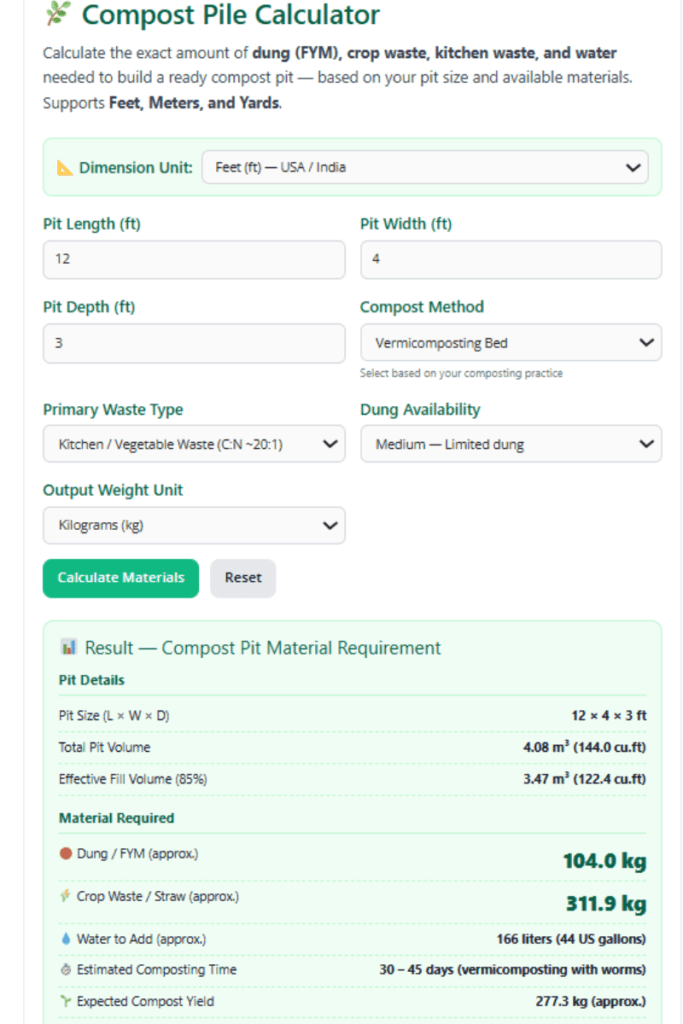
Click Calculate Materials and you get a complete material plan. Here’s what each output means:
Pit Size and Volume
Your entered dimensions confirmed, the total pit volume in cubic metres (with cubic feet shown alongside for reference), and the effective fill volume at 85 percent. This is the space you’re actually filling your planning baseline.
Dung / FYM Required
The estimated weight of animal manure or farmyard manure (FYM) you need to source before you start. This is one of the most useful outputs it tells you whether your current dung supply is enough or whether you need to collect more before starting.
Crop Waste / Straw Required
The estimated weight of dry organic material straw, crop residue, dry leaves, or fodder needed to fill the remaining volume. If you don’t have enough from your own farm, this number tells you how much to collect or purchase.
Water to Add
Shown in both litres and US gallons. This is approximately 30 percent of total material mass enough to bring the pile to roughly 55 percent moisture content, which is the sweet spot for microbial activity.
Don’t add all the water at once. Add it in layers as you build the pile, checking moisture by the sponge test squeeze a handful of material, and it should release just a drop or two of water.
Estimated Composting Time
A realistic timeline for your chosen method. Aerobic composting: 45 to 60 days with regular turning. Anaerobic: 90 to 120 days covered. Vermicomposting: 30 to 45 days with worms.
These are general ranges. Your actual time will vary with temperature, moisture maintenance, and turning frequency.
Expected Compost Yield
This is how much finished compost you can expect when the process is complete typically 40 to 50 percent of the total input material weight. Compost loses volume and mass through moisture evaporation and gas release during decomposition.
Knowing your expected yield helps you decide whether one pit is enough or whether you need to plan multiple batches to meet your soil amendment needs.
Recommended Application Rate
The tool recommends 2 to 5 tonnes per acre or 5 to 12 tonnes per hectare as a general soil application guideline. This helps you connect your compost yield to your field area and decide whether you have enough compost for your planned application or need to build more.
What Makes This Calculator Smarter Than a Basic Volume Formula
This Calculator Smarter:
C:N Ratio Adjustment
Most compost calculators just multiply volume by a fixed density. This one adjusts the material split based on your actual waste type’s carbon-to-nitrogen ratio. That means the dung and crop waste quantities it recommends are genuinely balanced for decomposition not just proportional guesses.
Method-Specific Yield Factors
Aerobic, anaerobic, and vermicomposting don’t produce the same yield from the same input. The calculator applies different yield factors 45%, 40%, and 50% respectively to give you a realistic output estimate for whichever method you choose.
85 Percent Fill Factor
The 15 percent headspace allowance is a detail that matters more than it sounds. An overfilled compost pit can’t be turned properly, loses heat inconsistently, and risks anaerobic pockets forming in an aerobic pile. The fill factor builds in that buffer automatically.
Triple Unit System
Feet for North American and South Asian users. Metres for international and European users. Yards for UK and Commonwealth users. Plus four weight output options. It’s genuinely designed for global use not just adapted from a single regional format.
Method-Specific Tips
After calculating, the tool displays a practical tip specific to your chosen composting method turning frequency for aerobic, covering guidance for anaerobic, and worm species recommendations for vermicomposting. It’s the kind of detail that makes the difference between a good pile and a great one.
Who Gets the Most Out of This Tool?
- Mixed Crop-Livestock Farmers: If you’ve got both animals and crop waste on your farm, you have everything you need for great compost. This calculator tells you the exact proportions to mix them in for each batch.
- Organic Farmers: Compost is the backbone of organic soil fertility. Knowing your material requirements before each composting cycle lets you plan your inputs and your soil nutrition program more precisely.
- Market Gardeners and Smallholders: Even a small pit needs the right ratios. Smallholders often waste compost potential by over-packing or under-filling. This tool gets the proportions right from the start, regardless of pit size.
- Vermicomposting Producers: Worm farmers who produce vermicast for sale or on-farm use need to plan their input volumes carefully. The vermicomposting option in this calculator is tailored specifically for that system.
- Agriculture Students and Extension Workers: The C:N ratio explanations and method comparisons built into this tool make it a practical learning resource for anyone studying soil science, organic farming, or composting technology.
- Community Composting Projects: NGOs and development organizations setting up community compost sites can use this tool to calculate material procurement needs before a project starts avoiding the common mistake of building a pit without enough material to fill it properly.
Step-by-Step: Using the Compost Pile Calculator
Let me walk you through a real example. You’re a mixed farmer with cattle. You’ve dug a compost pit that’s 12 feet long, 6 feet wide, and 3 feet deep. You have plenty of cattle dung and a good supply of crop straw. You want to use aerobic composting.
- Open the Compost Pile Calculator on Precision Agriculture Calculators.
- Set Dimension Unit to Feet.
- Enter Pit Length as 12, Width as 6, Depth as 3.
- Select Aerobic (Open Pit / Windrow) as your composting method.
- Select Crop Residue / Straw as your primary waste type (C:N ~80:1).
- Select High for dung availability you’ve got plenty from your cattle.
- Select Kilograms as your output weight unit.
- Click Calculate Materials.
Here’s what you’ll see:
- Total pit volume: 12 x 6 x 3 = 216 cubic feet = 6.12 m3.
- Effective fill volume at 85%: 5.20 m3.
- Total loose material mass: 5.20 x 160 = 832 kg.
- Dung required (40% of 832 x 1.0 C:N adjust): approximately 333 kg.
- Crop waste required (60% of 832 x 1.0): approximately 499 kg.
- Water to add: approximately 250 litres (66 US gallons).
- Composting time: 45 to 60 days, turn every 7 days.
- Expected compost yield: approximately 374 kg (45% of 832 kg).
That 374 kg of finished compost is enough to apply a meaningful soil amendment to roughly 0.2 acres at a standard application rate or enrich a smaller kitchen garden or market vegetable plot very generously.
For composting standards and C:N ratio references, the FAO Guide to Composting (Better Farming Series) and the Cornell Composting Science and Engineering resource are among the most comprehensive and globally trusted references available.
More Soil and Farm Fertility Tools on Precision Agriculture Calculators.
Composting is just one part of building healthy soil. Explore these related tools on Precision Agriculture Calculators to complete your soil fertility program:
- Vermicompost Bed Size Calculator: If you’re switching to vermicomposting, this tool calculates the exact bed dimensions you need for your worm population and input volume.
- Organic Carbon to NPK Ratio Calculator: Understand how your compost contributes to the NPK balance in your soil and how to complement it with additional fertilizer.
- Soil pH Corrector Calculator: Compost helps buffer soil pH, but if your soil is strongly acidic or alkaline, use this tool to calculate the lime or gypsum needed alongside your compost application.
Frequently Asked Questions
Read this faq’s and use this for your farm:
How do I know if my compost pile has the right moisture level?
The classic sponge test is still the best field method. Grab a handful of material from the centre of your pile and squeeze it tightly. If water runs out freely, it’s too wet add dry straw or crop waste and turn the pile. If no moisture comes out at all and the material feels dusty or crumbly, it’s too dry add water in small amounts and turn. If you get just one or two drops, you’re in the sweet spot.
My pile isn’t heating up. What’s wrong?
A cold pile usually means one of three things: it’s too dry, the C:N ratio is off, or the pile is too small to retain heat. Check moisture first add water if needed. If it’s still cold after moistening, add more nitrogen-rich material like dung, fresh green waste, or urea solution. And make sure your pile is at least 1 cubic metre in volume smaller piles don’t generate or retain enough heat for active thermophilic decomposition.
Can I add kitchen waste to a compost pit?
Yes, kitchen and vegetable waste is actually excellent for composting it’s nitrogen-rich and breaks down quickly. The key is to bury it in the centre of the pile and cover it with dry carbon material like straw or dry leaves. This prevents odour and deters pests. Avoid adding cooked food, oils, dairy, or meat to an open aerobic pit these attract animals and decompose poorly in standard compost conditions.
What is the difference between compost and vermicompost?
Both are organic soil amendments, but they’re produced differently and have slightly different properties. Standard compost is produced by thermophilic bacteria that heat the pile to 50 to 70 degrees Celsius, killing pathogens and weed seeds in the process. Vermicompost is produced by earthworms at ambient temperature it doesn’t get as hot, so it’s important to use only composted or safe inputs.
Vermicompost tends to have higher microbial diversity and is often richer in plant-available nutrients per kilogram than standard compost. Research published through the National Library of Medicine (PubMed) documents the consistently higher nutrient availability and plant growth promotion associated with vermicompost compared to thermophilic compost.
How long before I can apply the compost to my fields?
Your compost is ready when it looks dark brown or black, smells earthy (not sour or ammonia-like), feels crumbly, and no longer heats up when turned. For aerobic compost, that’s typically 45 to 60 days with regular turning. For anaerobic, allow the full 90 to 120 days. For vermicompost, harvest the castings when the material is uniformly dark and the worms have migrated to the top. Applying immature compost to actively growing crops can actually harm them the still-decomposing material can temporarily tie up soil nitrogen and damage roots.
Conclusion
Good compost starts with a good plan and that plan starts before you fill the first shovel.
The Compost Pile Calculator on Precision Agriculture Calculators takes the guesswork out of one of farming’s most valuable practices. You tell it your pit size, your composting method, and what materials you have available. It tells you exactly how much dung, crop waste, and water to prepare along with a realistic timeline and an expected yield in the weight unit you actually use.
Whether you’re aerobic composting on a small family farm, running an anaerobic pit on a larger operation, or managing a vermicomposting bed for high-value castings, this tool gives you a clear, science-based starting point that respects both your time and your resources. Combine it with the soil fertility tools on Precision Agriculture Calculators and you’ll have a complete, data-driven approach to building soil health naturally, sustainably, and for free.
Disclaimer
The Compost Pile Calculator on Precision Agriculture Calculators provides material estimates based on standard composting ratios, bulk density assumptions, and C:N guidelines. Actual results will vary depending on the moisture content of your raw materials, local climate and temperature, turning frequency, microbial activity, and the specific composition of your organic inputs.
The composting timelines provided are general estimates only actual decomposition rates will differ based on ambient conditions and management practices. Application rate recommendations are general guidelines and should be adjusted based on your soil test results and crop nutritional requirements.
Always consult a qualified agronomist or your local agricultural extension service for site-specific composting and soil fertility advice. The author and Precision Agriculture Calculators accept no liability for crop damage or fertility losses arising from decisions made based on this calculator’s output.