Introduction
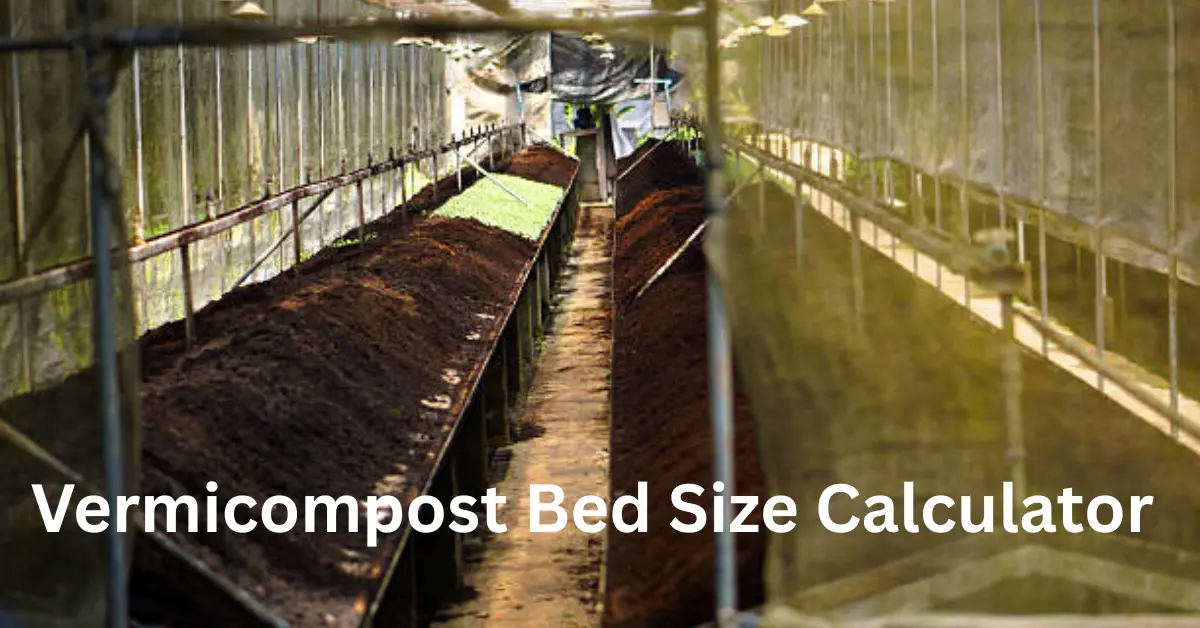
Vermicomposting is one of the smartest things a farmer can do with farm waste.
You take crop residue, kitchen scraps, and cattle dung that would otherwise rot in a corner. You add earthworms. Forty days later, you have one of the finest soil amendments in agriculture.
But here’s where most farmers go wrong.
They start without a plan. They build one bed, buy some worms, and add whatever waste is convenient. Then they’re surprised when the output doesn’t match what they need, or when they run out of waste to feed the worms, or when the economics don’t add up.
Good vermicomposting starts with a calculation, not a shovel.
How many beds do you actually need? How many kilograms of worms? How much raw material? And how much compost can you realistically expect to produce?
That’s exactly what the Vermicompost Bed Size Calculator on moralinsights.com answers.
It works in three modes depending on where you’re starting from. Mode 1 is for farmers who know their field area and want to produce enough compost for their own farm. Mode 2 is for farmers who know how much waste they can collect daily and want to maximize production from it. Mode 3 is for farmers or entrepreneurs who have a production or income target and need to design a commercial vermicomposting unit to achieve it.
🪱 Vermicompost Bed Size Calculator
Calculate the perfect vermicompost bed dimensions, earthworm quantity, raw material requirement, expected yield, and production schedule — based on your farm size, available waste, or income target. Supports all global units.
Why Vermicompost Is Worth Planning Properly
Vermicompost is not the same as ordinary compost.
The earthworms don’t just break down organic matter. They transform it into a product with unique biological properties that regular compost simply doesn’t have.
Research documented through the Food and Agriculture Organization of the United Nations (FAO) and published in peer-reviewed journals accessible through the National Library of Medicine (PubMed) consistently shows that vermicompost improves crop germination, root development, and yield at application rates much lower than conventional compost.
Here’s what makes vermicompost so valuable:
- Humus-rich castings. Earthworm castings are coated in mucus that binds soil particles into stable aggregates. This improves soil structure, aeration, and water-holding capacity at the same time.
- High microbial diversity. Vermicompost contains 1,000 to 10,000 times more beneficial microorganisms per gram than the raw materials fed to the worms. These microbes drive nutrient cycling and disease suppression in the soil.
- Plant-available nutrients. Nitrogen, phosphorus, and potassium in vermicompost are in forms that plant roots can absorb immediately. Conventional compost requires further microbial breakdown before nutrients become available.
- Plant growth hormones. Vermicompost contains plant hormones including auxins and gibberellins that stimulate root growth and flowering even at very low application rates.
- Disease suppression. Beneficial microorganisms in vermicompost actively suppress soil-borne pathogens like Fusarium, Pythium, and root-knot nematodes.
Despite all of this, vermicompost only works if you produce it consistently, in the right quantity, with the right raw material inputs.
Too few beds and you don’t produce enough to make a difference. Too many beds and you run out of waste to feed them.
This calculator finds that balance for your specific situation.
The Three Modes Explained
Mode 1: Design by Farm Area
Start here if you’re a farmer who wants to produce your own vermicompost and apply it to your fields.
You enter your farm area, select your crop type, and choose an application rate from light to intensive. The calculator works backwards: it figures out how much vermicompost your field needs per season, then designs the exact number of beds and worm stock to produce that amount.
You get a complete bed layout, timeline, and production schedule tailored to your crop’s compost demand.
Mode 2: Design by Waste Available
Use this mode if you have a fixed daily supply of organic waste and want to know how much compost you can produce from it.
Different waste types have different conversion rates. Cattle dung converts at about 50 percent because it’s already semi-composted and nutrient-rich. Kitchen and vegetable waste converts at about 28 percent because of its high moisture content. Crop residue converts at 35 percent.
The calculator designs a bed system sized to process your daily waste input without overloading the worms, and tells you your expected yield per cycle and per year.
Mode 3: Design by Income Target
This is the business planning mode.
Enter how many kilograms of vermicompost you want to produce or sell per month, your local selling price, raw material costs, and earthworm purchase cost. The calculator designs the bed system needed to hit that target and gives you a complete financial analysis: monthly revenue, initial investment, operating costs, monthly profit, annual ROI, and payback period.
This mode is designed for farmers considering vermicompost as an income-generating enterprise, not just a soil improvement practice.
What Does the Calculator Ask You to Enter?
Mode 1 Inputs
- Farm Area and Unit: Six area units supported: acres, hectares, square metres, square feet, Guntha, and Bigha.
- Compost Application Rate: Four levels from light (2 tonnes per acre per season) to intensive (8 tonnes per acre for nurseries and vegetables). Standard field crops use 3 tonnes per acre.
- Crop Type: Field crops, vegetables, fruit orchards, sugarcane/cotton, nursery seedlings, or lawn and garden. Different crops have different compost needs, and this affects the application rate guidance.
- Bed Dimension Unit: Feet or metres for the bed size display.
- Output Weight Unit: Kilograms, tonnes, quintals, or pounds.
Mode 2 Inputs
- Daily Organic Waste Available: Kilograms, tonnes, pounds, or quintals per day. Include all waste sources: crop residue, kitchen waste, cattle dung, sugarcane trash.
- Primary Waste Type: Crop residue, mixed farm waste, kitchen/vegetable waste, cattle dung, or press mud/sugarcane trash. This determines the conversion factor applied in the calculation.
Mode 3 Inputs
- Monthly Production Target: How many kilograms of finished vermicompost you want to produce per month.
- Selling Price per kg: Your local market price. Eight currencies supported: Indian Rupee, USD, Euro, British Pound, Nigerian Naira, Kenyan Shilling, Bangladeshi Taka, and Pakistani Rupee.
- Raw Material Cost: Cost per kg of waste. Enter 0 if you use free on-farm waste.
- Earthworm Cost per kg: Local purchase price per kilogram of earthworms. Eisenia fetida (red wigglers) are the standard species for vermicomposting.
What Do Your Results Show You?
Bed Layout Visual
A visual grid shows each recommended bed as a labelled box with its dimensions.
If you need 8 beds, you see 8 boxes. If you need 20, you see 12 boxes plus a count of the remaining. This gives an immediate physical sense of the scale of your vermicomposting unit.
Four Highlight Cards
The most important numbers appear in four coloured cards: number of beds, earthworms to stock, per-cycle compost yield, and one mode-specific card showing either your compost target, annual yield, or monthly revenue.
Six-Step Production Timeline
A visual timeline shows every stage of one production cycle: bed setup, worm stocking, active feeding, peak vermicomposting, harvest signal check, and harvesting and restocking.
Each step has a practical description of what to do and what to look for. It’s a reference guide built directly into your results.
Weekly Production Schedule Table
A detailed week-by-week schedule from bed setup to harvest. It tells you what to do each week: when to add the first waste layer, how often to feed during active growth, when to stop adding waste before harvest, and what mature vermicompost looks and smells like.
Detailed Summary
The full summary confirms all parameters: recommended bed size, number of beds, total bed area, raw material needed per cycle, worm stock required, cycle time, cycles per year, and annual vermicompost yield.
For Mode 3, the summary also shows the full financial breakdown including revenue, investment, operating costs, profit, ROI percentage, and payback period in months.
Management Tips
Each mode generates a specific set of practical management tips.
Mode 1 tips cover production timing relative to planting season and staggered harvesting. Mode 2 tips cover pre-composting dry waste and maintaining the correct carbon-to-nitrogen ratio. Mode 3 tips cover packaging, branding, direct sales strategy, and gradual scale-up.
What Makes This Calculator More Useful Than a Basic Bed Size Guide
Three Entry Points for Different Situations
Most vermicomposting guides give you a single calculation: how many beds for how much waste.
This tool gives you three completely different starting points. Farmer wanting soil improvement? Mode 1. Farmer with waste and no clear output target? Mode 2. Entrepreneur wanting a business plan? Mode 3.
Each mode is designed for a real decision that a real person actually faces.
Waste-Type-Specific Conversion Factors
Mode 2 uses five different conversion factors because different waste types produce very different quantities of vermicompost per kilogram of input.
Cattle dung converts at 50 percent because it’s dense, moist, and already partially broken down. Kitchen waste converts at only 28 percent because it’s 70 to 80 percent water. Using a single generic conversion factor for all waste types would give dramatically wrong yield estimates.
Feeding Capacity Calculation
Mode 2 sizes the beds based on the earthworm feeding rate: 0.5 kg of waste per kilogram of worms per day.
This prevents overloading, which is one of the most common causes of bed failure. Overloaded beds overheat, go anaerobic, and kill the worm population. Sizing beds to the feeding capacity prevents this from happening.
Cycle and Annual Yield Projections
The calculator uses a 40-day cycle with about 8 cycles per year.
Those numbers are realistic for a managed vermicomposting operation in a temperate to tropical climate. They’re not optimistic marketing figures. They build in a 7-day rest period between cycles for harvesting and restocking.
Business Financial Model in Mode 3
The financial model in Mode 3 amortizes initial investment over 24 months and adds monthly operating costs to give you a realistic monthly profit estimate, not just a gross revenue figure.
The payback period calculation tells you how many months of operation it takes to recover your initial investment. For most small-scale vermicomposting units, this is typically 6 to 18 months.
Who Benefits Most from This Calculator?
- Farmers Wanting to Reduce Fertilizer Costs: Producing your own vermicompost from on-farm waste reduces dependence on purchased fertilizers. Mode 1 tells you exactly what you need to build to supply your own fields.
- Livestock Farmers with Abundant Dung: Cattle and buffalo dung is one of the best raw materials for vermicomposting. If you have dairy animals, Mode 2 shows you how to turn that daily dung supply into a valuable product.
- Organic and Regenerative Farmers: Vermicompost is fully approved for organic certification. For farmers transitioning to organic production, it’s an essential soil amendment. This calculator helps you plan a supply that meets your farm’s needs.
- Entrepreneurs Starting a Vermicompost Business: Mode 3 is specifically designed for this. It gives you the bed design, worm stock, raw material requirement, and financial analysis needed to prepare a proper business plan.
- Agricultural Students and Extension Workers: The production timeline, weekly schedule, and management tips make this tool a practical learning resource for anyone studying organic farming or advising farmers on composting.
- NGOs and Rural Development Programs: Organizations setting up community vermicomposting units can use all three modes to plan the right scale for the community’s available waste and compost demand.
Step-by-Step: How to Use All Three Modes
Mode 1 Example: Planning for a 2-Acre Vegetable Farm
You grow vegetables on 2 acres and want to produce your own vermicompost for the season.
- Open the Vermicompost Bed Size Calculator on moralinsights.com.
- Stay on Mode 1.
- Set Farm Area Unit to Acres.
- Enter Farm Area as 2.
- Select Heavy application rate (5 tonnes per acre for vegetables).
- Select Vegetables and Salad Crops.
- Set Bed Dimension Unit to Feet.
- Click Calculate Bed Size.
Results: Compost needed = 10 tonnes = 10,000 kg per season. At 18 kg per m2 per cycle, you need 556 m2 of bed area. That’s 56 beds of 3m x 1m each. Worms needed = 556 kg. Raw material = 25,000 kg per cycle.
That’s a significant operation for 2 acres. If that’s too large, reconsider the application rate. Using the standard 3 tonnes per acre rate instead reduces the bed requirement to about 34 beds and the worm stock to around 333 kg.
Mode 2 Example: 50 kg Daily Waste from a Dairy Farm
You have 10 dairy cattle producing about 50 kg of mixed dung and crop residue per day.
- Click Mode 2.
- Set Waste Unit to Kilograms per day.
- Enter Daily Waste as 50.
- Select Mixed Farm Waste as waste type.
- Click Calculate from Waste.
Results: At 0.5 kg waste per kg worm per day, you need 100 m2 of bed area. That’s 10 beds of 3m x 1m. Worm stock = 100 kg. Waste per 40-day cycle = 2,000 kg. At 42 percent conversion, yield per cycle = 840 kg. Annual yield across 8 cycles = 6,720 kg.
That’s nearly 7 tonnes of vermicompost per year from waste that was previously just a disposal problem.
Mode 3 Example: Commercial Unit Targeting 500 kg per Month
You want to start a vermicompost business producing 500 kg per month. Selling price is 0.50 per kg in local currency. Worms cost 5.00 per kg. Waste is free from nearby farms.
- Click Mode 3.
- Select your local currency.
- Enter Monthly Target as 500.
- Enter Selling Price as 0.50 per kg.
- Enter Raw Material Cost as 0.
- Enter Worm Cost as 5.00 per kg.
- Click Calculate Business Plan.
The calculator designs the beds needed to produce 500 kg per month and shows your monthly revenue, initial investment in worms and infrastructure, monthly operating costs, monthly profit, and payback period.
The management tips remind you to start with a pilot of 10 beds, brand your packaging, and sell directly to vegetable farmers and nurseries for the best margins.
For global vermicomposting research, production standards, and earthworm species data, refer to the FAO Better Farming Series: Making Compost and peer-reviewed research on vermicompost benefits available through the National Library of Medicine (PubMed). The International Society for Tropical Ecology (ISTE) also publishes extensive research on tropical vermicomposting systems.
Related Tools on MoralInsights.com
Use the Vermicompost Bed Size Calculator alongside these tools for a complete organic soil management program:
- Compost Pile Calculator — If you’re building a standard compost pile alongside your vermicompost operation, use this tool to plan the materials and dimensions.
- Organic Carbon to NPK Ratio Calculator — Track how your vermicompost applications are building soil organic carbon and contributing to NPK supply over time.
- Soil pH Corrector Calculator — Vermicompost helps buffer soil pH over time. Check whether lime or sulphur is also needed alongside your vermicompost program.
- Crop-wise Fertilizer Calculator — After calculating your vermicompost supply, plan the supplementary chemical fertilizer needed to meet your crop’s full nutrient requirement.
- Goat Farming Profit Forecast — Vermicompost production can be integrated with goat farming. Goat droppings are an excellent worm feed. Use this tool to plan the combined enterprise.
- Farmer Profit and Loss Calculator — Include vermicompost production costs and savings in your complete farm profit and loss calculation.
- Gypsum Requirement Calculator — For sodic or compacted soils, combine vermicompost application with gypsum treatment for the fastest soil health improvement.
Frequently Asked Questions
What earthworm species should I use for vermicomposting?
Eisenia fetida, commonly called red wigglers or red worms, is the best species for vermicomposting worldwide. They’re surface feeders, reproduce rapidly, tolerate a wide range of conditions, and thrive in the high-organic-matter environment of a compost bed.
Do not use soil-dwelling earthworms (like Lumbricus terrestris, the common garden earthworm) in vermicompost beds. They’re deep burrowers that don’t thrive in confined beds and don’t process surface organic matter efficiently.
In tropical regions, Eisenia fetida is often sold locally as ‘African nightcrawlers’ or ‘red wigglers’ by vermicompost suppliers. Your local agricultural extension office or organic farming network can direct you to a local supplier.
What temperature is best for vermicomposting?
Eisenia fetida thrives between 15 and 30 degrees Celsius. The optimal range for fastest reproduction and fastest waste processing is 20 to 25 degrees.
Below 10 degrees, worms slow down dramatically. Below 5 degrees, they go dormant. Above 35 degrees, they try to escape and can die.
In hot climates, shade the bed and maintain moisture. In cold climates, insulate the bed with straw or covers and place it in a sheltered location.
How often should I add waste to the beds?
Add waste every 2 to 3 days in thin layers of 5 to 7 cm.
Never dump large amounts of waste at once. A sudden large addition generates heat as it begins decomposing. That heat spike can drive worms out of the bed or kill them. Small, regular additions maintain a stable temperature and keep the worms actively feeding throughout the bed.
The standard feeding rate is 0.5 kg of waste per kilogram of worms per day. This is the rate this calculator uses to size your beds.
How do I know when the vermicompost is ready to harvest?
Ready vermicompost looks like dark brown to black coffee grounds. It has a fresh, earthy smell, not the sour or ammonia smell of decomposing waste. It feels crumbly, not wet or stringy.
Stop adding new waste one week before you plan to harvest. This gives the worms time to process remaining material and lets the castings dry slightly, making harvesting easier.
The most common harvesting method is light separation: expose the bed to bright light for 15 minutes. Worms dislike light and migrate downward. You can then scoop the top layer of castings without capturing too many worms.
Can I sell vermicompost? How do I price it?
Yes. Vermicompost has a strong and growing market in most countries, driven by demand from organic farmers, home gardeners, nurseries, and urban agriculture.
Pricing depends heavily on your local market. In most agricultural markets, loose bulk vermicompost sells for less than branded, packaged product. Adding a simple printed bag and a nutrient analysis label can double or triple your price per kilogram.
Direct sales to vegetable farmers, nurseries, and gardening centres give the best margins. Selling through agricultural cooperatives or online is also an option in many regions.
Conclusion
Vermicomposting is one of the most practical and profitable ways to close the nutrient loop on your farm.
The Vermicompost Bed Size Calculator on moralinsights.com takes the guesswork out of setting up your operation. Mode 1 designs your bed system around your farm’s compost needs. Mode 2 designs it around your daily waste supply. Mode 3 builds a complete business plan around your income target.
Whatever your starting point, the tool gives you bed dimensions, worm stock, raw material requirements, a production timeline, a weekly schedule, and practical management tips in one complete, clear plan. Start small. Get the system right. Then scale confidently.
Disclaimer
The Vermicompost Bed Size Calculator on moralinsights.com provides bed size, production, and financial estimates based on standard vermicomposting parameters including a bed density of 200 to 300 kg per cubic metre, worm stocking rate of 1 kg per square metre, waste conversion ratio of 40 to 50 percent depending on waste type, and a production cycle of 40 days. Actual results will vary significantly with earthworm species, local climate and temperature, waste quality and moisture content, feeding consistency, and management practices.
The financial estimates in Mode 3 use simplified assumptions and are indicative only. Initial infrastructure costs vary with local construction methods and materials. Always start with a small pilot operation before scaling to a commercial unit. The author and moralinsights.com accept no liability for production shortfalls or financial losses arising from vermicompost operations designed using this calculator.
About the Author
Lalita Sontakke is the founder of moralinsights.com, a global agriculture-focused platform offering 47+ free tools and calculators for farmers, agronomists, soil scientists, and agricultural professionals worldwide. Her mission is to make precision farm management accessible to every farmer, free, practical, and available from any device, anywhere in the world.
Leave a Reply