Introduction
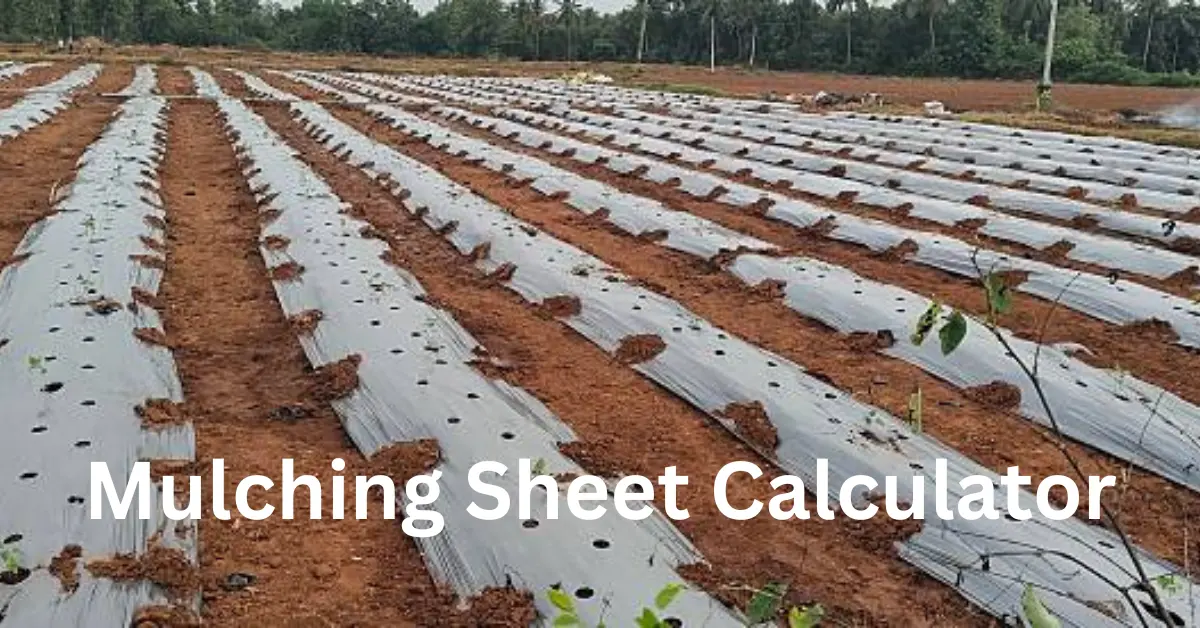
Every vegetable farmer knows the frustration. You buy mulching film, start laying it, and halfway through the field you run out. Now you either stop work, send someone to the market, or compromise the layout.
Or worse: you overbuy. Three rolls sit unused in your store at the end of the season because your estimate was off.
Both situations cost money. And both are completely avoidable with a proper calculation before you buy.
That’s exactly why I built the Mulching Sheet Calculator on moralinsights.com.
It’s a four-tab tool that covers everything from calculating how many rolls you need, to figuring out your return on investment from mulching, to planning your transplanting hole layout.
You enter your field size, row spacing, and film specifications. The calculator tells you the exact number of rolls to order, the total film weight, the percentage of your field that will be covered, and much more.
No more guessing at the hardware store. Just a clear, precise material plan before you start.
🌿 Mulching Sheet Calculator
Calculate the exact quantity of mulching film / plastic mulch required for your field. Estimate roll length needed, number of rolls, plastic weight, cost, and water savings — for any crop, field shape, and mulch type. Supports all global units.
Enter your field dimensions and mulch roll specifications to calculate exactly how many meters/rolls of mulching film you need.
Calculate the total cost of mulching and estimate savings on water, weeding labor, and fertilizer — to determine your return on investment.
Calculate the number and layout of planting holes to be punched or cut in the mulch film for transplanting seedlings.
Standard mulch specifications, crop-wise recommendations, and film type comparison guide.
Mulch Film Type Comparison
| Film Type | Best For | Weed Control | Soil Temp Effect | Lifespan |
|---|---|---|---|---|
| Black PE | Most vegetables, summer crops | Excellent (blocks light) | +2–4°C (warms soil) | 1 season |
| Silver-Black | Chili, tomato, aphid-prone crops | Excellent | Neutral to slight cool | 1 season |
| White-Black | Summer crops in hot regions | Excellent | −1 to −2°C (cools soil) | 1 season |
| Clear / Transparent | Soil solarization, cool season crops | Poor (promotes weeds) | +4–8°C (strong warming) | 1 season |
| Biodegradable | Organic farming, no removal needed | Good | Neutral | 1 season (degrades) |
| Paper Mulch | Organic, short-season crops | Moderate | Neutral | 4–8 weeks |
Crop-wise Mulch Recommendations
| Crop | Recommended Film | Film Width | Thickness | Row Spacing | Plant Spacing |
|---|---|---|---|---|---|
| Tomato | Black PE | 1.2 m | 25 micron | 1.2–1.5 m | 0.45–0.60 m |
| Chili / Capsicum | Silver-Black | 1.2 m | 25 micron | 1.2 m | 0.45 m |
| Onion | Black PE | 1.0 m | 20 micron | 0.9–1.0 m | 0.10–0.15 m |
| Watermelon | Silver-Black | 1.4 m | 30 micron | 2.0–2.5 m | 0.60–0.90 m |
| Strawberry | Black PE | 1.0 m | 25 micron | 0.9 m | 0.25–0.30 m |
| Potato | Black PE | 1.0–1.2 m | 25 micron | 0.9 m | 0.25–0.30 m |
| Cucumber | Black PE | 1.2 m | 25 micron | 1.5 m | 0.45–0.60 m |
| Cabbage / Cauliflower | White-Black | 1.2 m | 25 micron | 1.2 m | 0.45 m |
| Brinjal / Eggplant | Black PE | 1.2 m | 25 micron | 1.2 m | 0.60 m |
| Maize / Corn | Biodegradable | 0.9–1.0 m | 10–15 micron | 0.6–0.9 m | 0.20–0.30 m |
Standard Roll Sizes Available in Market
| Width | Common Roll Length | Thickness | Approx. Weight/Roll |
|---|---|---|---|
| 0.9 m (36 inch) | 400–800 m | 20–30 micron | 8–20 kg |
| 1.0 m (39 inch) | 400–800 m | 20–30 micron | 9–22 kg |
| 1.2 m (48 inch) | 400–800 m | 25–30 micron | 12–28 kg |
| 1.4 m (55 inch) | 400–600 m | 25–30 micron | 14–25 kg |
| 1.6 m (63 inch) | 300–500 m | 25–40 micron | 14–30 kg |
Benefits of Mulching (Field Research Data)
| Benefit | Typical Improvement |
|---|---|
| Water use reduction | 25–40% less irrigation |
| Weed suppression | 80–95% reduction |
| Soil temperature regulation | ±2–8°C depending on film type |
| Fertilizer / nutrient retention | 20–30% better uptake |
| Fruit / vegetable quality | Cleaner produce, less soil splash disease |
| Yield increase | 15–35% higher in most vegetable crops |
| Labor saving (weeding) | 60–80 hrs/acre per season saved |
Why Mulching Is One of the Best Investments in Vegetable Farming
Plastic mulch has been transforming vegetable farming for decades.
Research published through the Food and Agriculture Organization of the United Nations (FAO) and field trials worldwide consistently show that plastic mulching delivers multiple simultaneous benefits to vegetable crops.
Here’s what you get from a good mulching program:
- 25 to 40 percent less irrigation. Mulch dramatically reduces soil surface evaporation. The soil under the film stays moist much longer between irrigations. In water-scarce regions, this is often the single most valuable benefit.
- 80 to 95 percent reduction in weeding labour. Weeds can’t germinate without light. Black mulch blocks sunlight completely. A field that previously needed 60 to 80 hours of weeding labour per acre per season needs almost none with proper mulch coverage.
- Soil temperature regulation. Black film warms soil by 2 to 4 degrees Celsius, promoting faster crop establishment in cooler seasons. White-black film cools soil in hot climates. Clear film heats soil most intensively for solarization.
- Better fertilizer efficiency. Nutrients applied under the mulch don’t leach away with rain or flood irrigation. Studies show 20 to 30 percent better nutrient uptake in mulched crops compared to bare soil.
- Cleaner, higher quality produce. Fruits and vegetables don’t touch bare soil. Soil splash diseases are dramatically reduced. Market-ready produce rates go up.
- 15 to 35 percent higher yields. Combining all these benefits, mulched vegetable crops consistently outperform bare soil crops across tomato, chili, onion, cucumber, strawberry, and most other vegetable species.
These benefits are real. I’ve seen them on farms across different climates and cropping systems. But the key to getting them is using the right film, in the right quantity, laid correctly.
And that starts with knowing exactly how much mulch you need.
What the Four Tabs Cover
Tab 1: Mulch Quantity
This is where most farmers start. Enter your field length and width, your row spacing, your film width and roll length, and the tool calculates everything.
You get the number of mulch rows in your field, the net and gross film length needed, the number of rolls to order, the total coverage area and coverage percentage, and the estimated film weight.
Tab 2: Cost and Savings
This tab turns your mulch investment into a financial analysis.
Enter the cost per roll, laying labour cost, your current water cost, daily water usage, weeding labour cost, and crop season length. The tool calculates your total investment, your estimated water and weeding savings, net benefit, ROI percentage, and payback period in days.
Tab 3: Planting Holes
Once the mulch is laid, you need to know where and how many holes to punch for your transplants.
Select your crop, enter bed length and number of beds, and the tool calculates the total number of planting holes, plant density per square metre, total film area exposed through holes, and the percentage of film that stays intact.
Tab 4: Crop Reference
A built-in reference guide covering film type comparison, crop-wise film recommendations with standard widths and thicknesses, available roll sizes, and a summary of field research data on mulching benefits.
Use this tab to choose the right film type before filling in the other three tabs.
What Does the Calculator Ask You to Enter?
Tab 1: Mulch Quantity Inputs
- Field Length and Width: Supports metres, feet, yards, and centimetres. Each dimension can use a different unit.
- Row Spacing (bed to bed): The distance between the centre of one mulched bed and the next. This determines how many rows of mulch fit across your field width. Supports metres, feet, centimetres, and inches.
- Mulch Film Width: The width of your mulch roll as it unrolls. Standard sizes are 0.9 m, 1.0 m, 1.2 m, 1.4 m, and 1.6 m. Make sure this is at least equal to your bed width plus twice the overlap on each side.
- Roll Length: How many metres of film are wound on each roll. Standard rolls are 400 to 800 metres long depending on thickness and width.
- Film Thickness: Supports microns (standard), millimetres, and mil (thou). Typical field-grade mulch is 20 to 30 microns. Heavier biodegradable films may be 10 to 15 microns but denser.
- Film Type: Choose from Black PE, Silver-Black, White-Black, Clear, Biodegradable, or Paper Mulch. This affects the weight calculation since different materials have different densities.
- Overlap on Each Side: The amount of film tucked into the soil on each edge to hold it down and seal out weeds. Standard is 10 to 15 cm on each side.
- Wastage Factor: 3 percent for machine laying, 5 percent for standard manual laying, 8 percent for rough terrain, 10 percent for hilly or irregular fields.
Tab 2: Cost and Savings Inputs
- Number of Rolls: Copy directly from Tab 1 results.
- Cost per Roll and Currency: Supports 7 currencies: INR, USD, EUR, GBP, ZAR, AUD, and BRL. Enter your local purchase price per roll.
- Laying Labour Cost: Total labour cost to lay the mulch in your field for the season.
- Water Cost per 1,000 Litres: Your cost per unit of water. Used to calculate the monetary value of the 30 percent water saving from mulching.
- Daily Water Used Before Mulching: Your current irrigation volume per day in litres. The tool calculates savings based on a 30 percent reduction.
- Weeding Labour Cost Before Mulching: What you currently spend on weeding per season. The tool calculates savings based on an 85 percent reduction.
- Crop Season Duration: In days. This determines the total water saving over the season.
Tab 3: Planting Holes Inputs
- Bed Length and Number of Beds: The length of each mulched bed and how many beds you have in the field.
- Rows per Bed: 1 to 4 rows of plants within each mulched bed. Two rows per bed is most common for tomato and chili.
- Plant Spacing Within Row: Distance between transplants along the row. Supports metres, centimetres, inches, and feet.
- Hole Diameter: The size of the hole to be punched or cut in the film for each transplant. Supports centimetres, inches, and millimetres.
- Crop Auto-fill: Select your crop and the tool auto-fills the standard plant spacing, rows per bed, and hole diameter for 11 common crops.
What Do Your Results Show You?
Tab 1: Mulch Quantity Results
The results show the number of mulch rows across your field width. This tells you how many parallel strips of film you’ll lay.
Net mulch length is the total running metres of film needed without any buffer. Gross length adds the wastage factor.
The number of rolls to order is the critical procurement number. Always round up to the next whole roll.
Coverage area and percentage show how much of your total field area is actually covered by mulch. For good weed control, aim for at least 60 to 70 percent coverage. Lower coverage means more exposed soil between rows where weeds can still establish.
Film weight is calculated from film width, gross length, thickness, and film type density. This helps you estimate transport weight and compare costs between different roll options.
Tab 2: Cost and Savings Results
The investment section shows your film cost, laying labour, and total upfront investment.
The savings section shows estimated water cost saving based on a 30 percent reduction in daily water use over your season length, and weed labour saving based on an 85 percent reduction.
ROI is calculated as net benefit divided by total investment. An ROI above 50 percent means mulching pays for itself well within the season.
Payback period shows how many days into the season your savings cover the investment. Most well-managed mulching programs pay back in 30 to 60 days.
Tab 3: Planting Holes Results
Total holes tells you how many times you need to use the hole puncher or hot rod across your entire field. This is your labour planning number.
Plant population density in plants per square metre helps you verify that your spacing matches agronomic recommendations for your crop.
The percentage of film remaining intact is useful for understanding weed suppression effectiveness. Larger holes reduce the intact film percentage and allow more light through, which can reduce weed suppression.
What Makes This Calculator Practical
Mixed Unit Support
Every dimension field has its own unit selector. You can enter field length in feet, row spacing in inches, film width in centimetres, and roll length in metres in the same calculation.
No manual conversion needed. The tool handles it all internally.
Wastage Factor
A 5 percent wastage buffer on a standard manual installation might seem small. But on a large field, it’s the difference between finishing the job and being a few metres short on the last row.
The tool offers four wastage levels from machine installation to hilly terrain. Choose the one that matches your conditions.
Film Weight Calculation
Knowing your film weight before purchase helps you compare the cost-per-kilogram of different roll options and estimate delivery logistics.
The weight formula uses actual PE density of 920 kg per cubic metre, biodegradable film density of 1,240 kg per cubic metre, and paper density of 700 kg per cubic metre.
Multi-Currency ROI
The Cost and Savings tab supports 7 currencies. Farmers in South Africa, Brazil, Australia, and Europe can calculate their ROI in their own currency without conversion.
Crop Auto-Fill for Holes
The 11-crop auto-fill in Tab 3 pre-sets the standard plant spacing, rows per bed, and hole diameter for tomato, chili, onion, watermelon, strawberry, brinjal, cucumber, potato, maize, sunflower, and cabbage.
You can always override these values if your local practice or variety requires different spacing.
Who Benefits Most from This Tool?
- Vegetable Farmers Planning a New Season: Before placing your mulch order at the beginning of the season, use Tab 1 to calculate the exact number of rolls for each field. No over-ordering. No mid-season shortages.
- Farmers Considering Mulching for the First Time: Tab 2 shows you the financial return before you commit. Enter your current water and weeding costs and see whether the investment makes sense for your operation.
- Drip Irrigation Users: Drip tape is laid under the mulch in most modern vegetable systems. Planning your mulch rows correctly ensures the drip laterals align with the planted rows. Tab 1 gives you the row layout and spacing numbers your drip designer needs.
- Nursery and Transplant Farmers: Tab 3 calculates your total transplant hole count, helping you plan hole-punching labour and verify that your plant population matches your target density.
- Agricultural Input Suppliers and Dealers: Use this tool to calculate the right quantity of mulch film for your farmer clients before placing orders with your distributor.
- Extension Workers and Farm Advisors: A quick planning tool for recommending the correct mulch film type, width, and quantity during farm advisory visits.
Step-by-Step: How to Use the Mulching Sheet Calculator
Here’s a complete example. You have a 100-metre by 50-metre tomato field. Your row spacing is 1.2 metres. You plan to use 1.2-metre-wide black PE mulch film, 25 microns thick, with rolls 400 metres long. You overlap 15 cm on each side. You lay manually. Your field is on flat terrain.
Step 1: Calculate Mulch Quantity (Tab 1)
- Open the Mulching Sheet Calculator on moralinsights.com.
- Stay on Tab 1.
- Enter Field Length as 100 metres, Field Width as 50 metres.
- Select Acres for area display.
- Enter Row Spacing as 1.2 metres.
- Enter Film Width as 1.2 metres, Roll Length as 400 metres.
- Enter Film Thickness as 25 microns.
- Select Black Polyethylene as film type.
- Enter Overlap as 15 cm on each side.
- Select 5% wastage (standard manual).
- Click Calculate Quantity.
Results: Field area = 5,000 m2 (0.49 acres). Number of mulch rows = 42 rows. Net film length = 4,200 m. Gross length with 5% wastage = 4,410 m. Rolls needed = 11 rolls (at 400 m each). Coverage area = 5,040 m2. Coverage percentage = 100.8%. Film weight = approximately 11.2 kg per roll, total 123 kg.
Order 11 rolls. Your entire field will be covered.
Step 2: Calculate ROI (Tab 2)
- Click Tab 2.
- Enter Rolls as 11.
- Enter Cost per Roll in your local currency.
- Enter your laying labour cost for the field.
- Enter your daily water usage, water cost, and weeding labour cost.
- Enter Season Duration as 120 days.
- Click Calculate Cost and ROI.
The tool will show your total investment, estimated water and weed savings, net benefit, ROI percentage, and how quickly the investment pays back within the season.
Step 3: Plan Your Transplanting Holes (Tab 3)
- Click Tab 3.
- Select Tomato from the crop dropdown.
- The tool auto-fills: plant spacing 0.45 m, 2 rows per bed, hole diameter 8 cm.
- Enter Bed Length as 100 metres.
- Enter Number of Beds as 42 (matching your mulch rows).
- Click Calculate Holes.
Results: Plants per row = 222. Holes per bed = 444. Total holes in field = 18,648 holes. Plant density = approximately 3.7 plants per m2. Film intact percentage is very high since 8 cm holes are small relative to the 1.2 m wide film.
That’s your transplanting plan. 18,648 seedlings to prepare and 18,648 holes to punch.
For global research on plastic mulch benefits and best practices, the FAO Good Agricultural Practices resource and the International Society for Horticultural Science (ISHS) publish extensive peer-reviewed research on mulching outcomes across vegetable crops worldwide.
Related Tools on MoralInsights.com
Use the Mulching Sheet Calculator alongside these tools for complete crop planning:
- Drip Irrigation Layout Calculator: Design your drip tape layout under the mulch using the same row spacing and field dimensions.
- Irrigation and Fertigation Calculator: Calculate your daily irrigation volume after mulching, accounting for the 30 percent reduction in water demand.
- Evapotranspiration (ET) Calculator: Get a precise daily crop water demand figure to compare your pre-mulching and post-mulching irrigation needs.
- Crop Water Requirement Calculator: Calculate seasonal water needs for your tomato, chili, or other vegetable crop.
- Foliar Spray Nutrient Dosage Calculator: Mulched crops often need micronutrient foliar sprays since soil application is restricted by the film cover.
- Crop-wise Fertilizer Calculator: Plan your fertigation doses for crops grown under mulch with drip irrigation.
- Farmer Profit and Loss Calculator: Include your mulch investment and savings in your complete farm profit and loss calculation for the season.
Frequently Asked Questions
Which mulch film colour should I choose for my crop?
Black PE is the right choice for most vegetable crops in most conditions. It blocks light completely, prevents weed germination, and warms the soil by 2 to 4 degrees Celsius.
Use Silver-Black film for aphid-prone crops like chili and capsicum. The reflective silver surface confuses and repels aphids. It also keeps soil slightly cooler than black film.
White-Black film is best for crops growing through hot summers in tropical or subtropical regions where soil overheating is a problem. The white top reflects sunlight and keeps the root zone cooler.
Clear film is only for soil solarization, not for crop production with live plants in the ground.
What thickness of mulch film should I buy?
For standard single-season vegetable crops, 20 to 25 micron film works well for manual laying. It’s strong enough to last the season but light enough to handle easily.
If you’re using a mechanical film layer or if the field has rough terrain with sharp stones or stubble, go to 30 microns for better puncture resistance.
Biodegradable films are typically 10 to 15 microns but denser in material. They’re more expensive per roll but eliminate the cost and labour of film removal and disposal after harvest.
How do I secure the edges of mulch film to prevent wind lifting?
The standard method is to tuck 10 to 15 cm of film into a furrow on each side of the bed and cover it with soil. This is what the overlap input in Tab 1 accounts for.
In areas with strong winds, deepen the furrow to 20 cm and pack the soil firmly. Some farmers use U-shaped metal pins or heavy stones at intervals along the edges as additional anchors.
Once the film is secured, it should stay in place even in strong winds if the edges are properly buried.
Can I reuse plastic mulch film for a second season?
Standard 20 to 25 micron PE mulch is designed for single-season use. By the end of the season, UV exposure makes it brittle and difficult to remove cleanly without leaving fragments in the soil.
Heavier films of 40 microns or more can sometimes be reused, but they must be inspected carefully for tears and cleaned of soil and crop debris between seasons.
Biodegradable mulch is the cleanest option for those who want no removal or reuse concern. It breaks down naturally in the soil over 6 to 12 months after incorporation.
What is soil solarization and when should I use clear film?
Soil solarization is a technique where clear plastic film is laid over moist bare soil for 4 to 8 weeks during the hottest time of year. The trapped heat raises soil temperature to 45 to 60 degrees Celsius at the surface.
This kills soilborne pathogens, nematodes, and weed seeds without chemicals. It’s widely used before planting susceptible crops like tomato and capsicum in fields with a history of Fusarium wilt or root-knot nematode.
Clear film should only be used for solarization and removed before planting. If left in place with live crops, it promotes weed growth under the film.
Conclusion
Plastic mulch is one of the most effective tools available to vegetable farmers. It saves water, kills weeds, improves soil conditions, and consistently raises yields.
But like any tool, it only works well when used correctly and in the right quantity. The Mulching Sheet Calculator on moralinsights.com takes all the guesswork out of your mulch planning. Tab 1 tells you exactly how many rolls to buy. Tab 2 shows you whether the investment makes financial sense. Tab 3 plans your transplanting hole layout. And Tab 4 gives you the reference data to choose the right film for your crop and climate.
Use it before every planting season and you’ll walk into your mulch purchase with confidence, knowing exactly what you need and exactly what you’ll get back.
Disclaimer
The Mulching Sheet Calculator on moralinsights.com provides material quantity, cost, and savings estimates based on standard agronomic practices, typical roll specifications, and field research data. Results are for planning purposes only.
Actual material requirements may vary with field shape irregularities, terrain, installation method, and film brand specifications. Film weight estimates use standard PE density of 0.92 g per cubic centimetre. Water and weed saving percentages are based on published field research averages and individual results will vary with crop type, climate, irrigation system, and farm management practices. Cost and ROI calculations are based entirely on user-entered values.
Always verify roll dimensions and film specifications with your supplier before purchase. The author and moralinsights.com accept no liability for material shortages or cost overruns arising from decisions made based on this calculator.
About the Author
Lalita Sontakke is the founder of moralinsights.com, a global agriculture-focused platform offering 47+ free tools and calculators for farmers, agronomists, and agricultural professionals worldwide. Her mission is to make precision farm management accessible to every farmer, free, practical, and available from any device, anywhere in the world.
Leave a Reply