Introduction: The Problem Every Farmer Faces at the Start of Every Season
Every season, millions of farmers face the same question standing at the edge of their field: how much fertilizer do I actually need, and when do I apply it?
Most of them guess. Not because they are careless but because the information they need is scattered across extension pamphlets, agronomy textbooks, and fertilizer dealer recommendations that do not always agree with each other. One dealer says apply 2 bags of urea per acre. A neighbour says 3. The government leaflet says something different for irrigated versus rainfed. And none of them tell you how to split the doses across the crop season.
The result? Farmers either over-apply fertilizer spending more money than necessary and risking soil damage or they under-apply and lose yield at harvest time. Both mistakes are costly. Both are preventable.
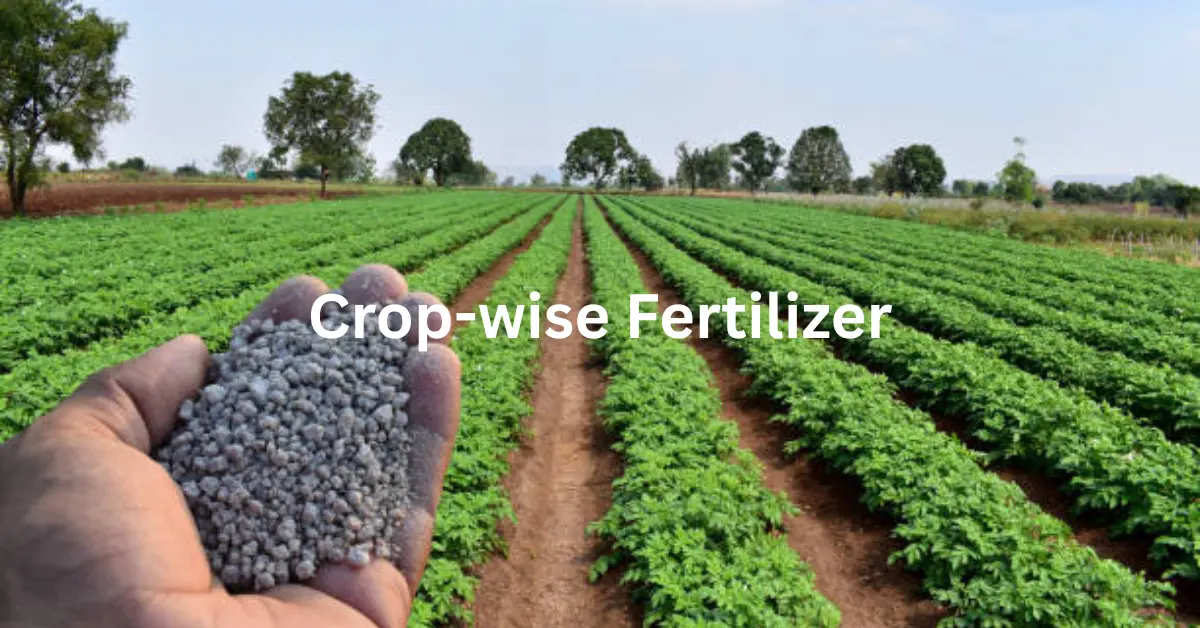
I built the Crop-wise Fertilizer Calculator on MoralInsights.com to solve this exact problem. You enter your field size, your crop, whether you are irrigated or rainfed, and which phosphorus product you have access to. The calculator instantly tells you the exact quantity of Urea, P-fertilizer, and MOP (potash) you need and then splits that total into Basal, 1st, 2nd, and 3rd doses, so you know precisely how much to apply at each stage of crop growth.
No guesswork. No conflicting advice. Just a clear, crop-specific fertilizer plan based on standard agronomic recommendations.
Crop-wise Fertilizer Calculator (Irrigated & Rainfed)
Calculates crop-specific fertilizer requirement and automatically splits it into Basal, 1st, 2nd, and 3rd doses based on standard practice. Results are approximate.
1) Field & Crop
2) Phosphorus (P) Source
Why Getting Fertilizer Rates and Timing Right Is Critical
Fertilizer is the single largest input cost for most crop farmers worldwide. Getting it wrong in either direction — too much or too little, too early or too late has serious consequences.
The Food and Agriculture Organization of the United Nations (FAO) estimates that nutrient losses from poor fertilizer management cost the global agricultural sector billions of dollars every year. Their comprehensive resource on plant nutrition and fertilizer best practices is available at https://www.fao.org/agriculture/crops/thematic-sitemap/theme/spi/soil-biodiversity/soil-nutrient-management/en/. The FAO's data consistently shows that split application of nitrogen dividing the total dose across multiple growth stages rather than applying it all at once improves nitrogen use efficiency by 15 to 30 percent compared to single basal application.
The International Plant Nutrition Institute (IPNI), now part of the International Fertilizer Association (IFA), has published extensive crop-specific nutrient requirement data that underpins many national fertilizer recommendation systems. Their resources are available at https://www.fertilizer.org/. Their research confirms that crops like maize, cotton, and wheat respond strongly to staged nitrogen application, while legumes like soybean, chickpea, and groundnut require far less nitrogen due to biological nitrogen fixation but have higher phosphorus needs.
The cost of getting this wrong is real and immediate. A wheat farmer applying 100 kg/ha of nitrogen when the crop needs 120 kg/ha on irrigated land will typically see a 10 to 15 percent yield reduction. A cotton farmer applying all their nitrogen at basal when 80 percent should come at later growth stages will see poor boll development and wasted investment. And a farmer using SSP as their phosphorus source without adjusting their urea rates to compensate because SSP contributes no nitrogen unlike DAP will likely face nitrogen deficiency at tillering or vegetative stages.
The Crop-wise Fertilizer Calculator eliminates all of these risks by doing the precise calculation for your specific crop, system, and product combination.
What the Crop-wise Fertilizer Calculator Calculates
This calculator produces one of the most complete fertilizer planning outputs available in a free tool. Here is what you get and why each number matters.
Total Urea Required (kg): Urea at 46% nitrogen is the most widely used nitrogen fertilizer worldwide. The calculator works out exactly how much urea your crop needs for your field area, then adjusts this figure based on how much nitrogen is already being contributed by your phosphorus fertilizer. For example, DAP (18-46-0) contributes 18% nitrogen, so the urea requirement is reduced accordingly. This prevents accidental nitrogen over-application when using compound fertilizers.
Total P-Fertilizer Required (kg): Depending on which phosphorus source you select DAP, MAP, TSP, or SSP the calculator gives you the exact bag quantity needed to deliver the required phosphorus dose to your crop. Each product has a different phosphorus analysis, so the physical quantity of bags you need varies significantly even for the same nutrient target.
Total MOP Required (kg): MOP (Muriate of Potash at 60% K₂O) is the standard potassium fertilizer used globally. The calculator gives you the total MOP requirement for your crop and field area based on crop-specific K₂O recommendations.
Dose Split Table — Basal, 1st, 2nd, and 3rd Doses: This is the most practically useful output. For each fertilizer (Urea, P-source, MOP), the calculator splits the total into timed application doses. Basal is applied at or before sowing. The 1st dose typically coincides with early vegetative growth. The 2nd dose comes at a key growth stage such as tillering in wheat, knee-high in maize, or squaring in cotton. The 3rd dose, where applicable, is applied at a later reproductive stage. Knowing these split quantities means you can plan your fertilizer purchases, storage, and labour at the right time not all at once.
What Does the Calculator Ask You to Enter?
The inputs are minimal and practical. Any farmer who knows their field and crop can fill this out in under a minute.
Field Area: Enter the numeric size of your field. The calculator accepts any size from a small kitchen garden to a large commercial farm.
Area Unit: Choose from Hectares, Acres, Square Meters, or Square Feet. The calculator converts all inputs internally to hectares for calculation, so you never need to do unit conversions yourself. A farmer in India using acres and a farmer in Europe using hectares both get accurate results.
Crop: Select your crop from the dropdown. The current list includes Wheat, Rice, Maize, Cotton, Soybean, Groundnut, Chickpea, Sorghum, Millet, Sunflower, Vegetables, and Other. Each crop has its own NPK recommendation built in, reflecting internationally recognised agronomic standards for that crop's nutrient requirements and growth pattern.
Farming System — Irrigated or Rainfed: This is one of the most important inputs and one that many generic calculators ignore entirely. An irrigated wheat crop has a nitrogen requirement of 120 kg/ha. The same wheat in a rainfed system needs only 80 kg/ha because lower water availability limits the crop's ability to use higher nitrogen inputs efficiently. The calculator has separate nutrient recommendations for both systems for every crop in the list.
Phosphorus Source: Select from DAP (18-46-0), MAP (11-52-0), TSP (0-46-0), or SSP (0-16-0). This selection fundamentally changes the physical quantities recommended because each product carries a different nutrient concentration. It also affects the urea calculation since DAP and MAP both contribute nitrogen, while TSP and SSP do not.
What Makes This Calculator Practically Useful
The fertilizer advice most farmers receive is generic "apply 2 bags of DAP per acre" without accounting for crop type, water availability, or the nitrogen contribution of the phosphorus product being used. This calculator is different in several important ways.
It handles P-source adjustment automatically. When you select DAP as your phosphorus source, the calculator subtracts the nitrogen contributed by DAP from the total nitrogen requirement before calculating urea. Many farmers using DAP unknowingly over-apply urea because they do not account for DAP's 18% nitrogen content. On a 5-hectare wheat field, this mistake alone can waste 50 to 70 kg of unnecessary urea costing the farmer real money.
It distinguishes irrigated from rainfed systems. This distinction can change fertilizer requirements by 30 to 40 percent for many crops. Using irrigated recommendations on a rainfed field leads to fertilizer waste and potential leaching losses. Using rainfed recommendations on an irrigated field leads to under-nutrition and yield loss.
It covers 12 crops with distinct nutrient profiles. Legumes like soybean, chickpea, and groundnut fix their own nitrogen and need far less N input. Cereals like maize and wheat are heavy nitrogen feeders. Cotton is a balanced feeder across N, P, and K. The calculator reflects these biological differences precisely.
The dose split table saves real money. Applying 100% of nitrogen at basal is one of the most common and costly mistakes in crop nutrition. The calculator's split schedule, based on standard agronomic practice, ensures nitrogen is available when the crop actually needs it — reducing losses to volatilisation and leaching, and improving uptake efficiency.
Who Benefits Most from This Calculator?
Wheat and rice farmers in South Asia and North Africa: These are among the most fertilizer-intensive crops in the world. Getting the NPK balance right and splitting nitrogen correctly across irrigated seasons can make a 10 to 20 percent difference in yield on established farms. The calculator's irrigated versus rainfed distinction is directly relevant to the mixed farming systems across India, Pakistan, Bangladesh, and Egypt.
Maize farmers in Sub-Saharan Africa and Latin America: Maize has one of the highest nitrogen requirements of any common food crop. Underfertilisation is the primary reason for yield gaps in smallholder maize farming across Africa. This calculator gives smallholders a free, science-based starting point for their fertilizer planning.
Cotton and vegetable farmers: These crops have multi-stage nutrient demands that change significantly across the growing season. A single basal application strategy fails these crops. The calculator's 4-stage split output is directly suited to their needs.
Farmers switching between P-sources: A common situation is when a farmer's regular DAP supply runs short and they need to substitute with SSP or TSP. The calculator lets you instantly see how the physical quantity changes and how urea requirements shift — a practical tool for in-season decision making.
Agricultural extension workers and agronomists: Field extension workers who advise hundreds of smallholders can use this calculator as a fast reference tool during farm visits, generating crop-specific fertilizer plans on the spot without needing to carry reference tables.
Farming students and trainees: The dose split table, combined with the P-source adjustment logic, makes this calculator an excellent teaching tool for understanding how fertilizer products, nutrient analysis, and crop growth stages interact.
Step-by-Step: How to Use the Crop-wise Fertilizer Calculator
Let me walk through a complete real-world example so the output is fully clear.
Scenario: Amara is a maize farmer in Kenya. She has a 2-acre irrigated field and plans to use DAP as her phosphorus source alongside urea and MOP.
Step 1 — Enter Field Area: Amara enters 2 in the Field Area box.
Step 2 — Select Area Unit: She selects Acres. The calculator internally converts this to 0.809 hectares.
Step 3 — Select Crop: She selects Maize from the dropdown.
Step 4 — Select Farming System: She selects Irrigated. The calculator uses the irrigated maize recommendation of N: 150 kg/ha, P: 60 kg/ha, K: 40 kg/ha with a dose split of 30% Basal / 30% 1st / 25% 2nd / 15% 3rd.
Step 5 — Select Phosphorus Source: She selects DAP (18-46-0).
Step 6 — Click Calculate.
What happens internally:
- Total N needed: 150 × 0.809 = 121.4 kg
- Total P₂O₅ needed: 60 × 0.809 = 48.5 kg
- Total K₂O needed: 40 × 0.809 = 32.4 kg
- DAP required: 48.5 ÷ 0.46 = 105.5 kg
- N from DAP: 105.5 × 0.18 = 19.0 kg
- Remaining N for urea: 121.4 − 19.0 = 102.4 kg
- Urea required: 102.4 ÷ 0.46 = 222.6 kg
- MOP required: 32.4 ÷ 0.60 = 54.0 kg
Results Amara sees:
| Fertilizer | Total | Basal | 1st Dose | 2nd Dose | 3rd Dose |
| Urea (46% N) | 222.6 kg | 66.8 kg | 66.8 kg | 55.7 kg | 33.4 kg |
| DAP (18-46-0) | 105.5 kg | 31.7 kg | 31.7 kg | 26.4 kg | 15.8 kg |
| MOP (60% K₂O) | 54.0 kg | 16.2 kg | 16.2 kg | 13.5 kg | 8.1 kg |
What Amara now knows: She needs to buy approximately 223 kg of urea, 106 kg of DAP, and 54 kg of MOP for her 2-acre maize field. At sowing, she applies the Basal amounts. At early vegetative stage she applies the 1st dose. At knee-high she applies the 2nd dose. And at tasselling she applies the final 3rd dose. Her fertilizer purchases can be planned and budgeted stage by stage rather than all upfront.
Related Tools on MoralInsights.com
These related tools work alongside the Crop-wise Fertilizer Calculator to give you a complete crop management plan:
- Liquid Fertilizer Dilution Calculator — Calculate the exact dilution ratio for any liquid fertilizer or foliar spray for your field size.
- Soil pH Corrector Calculator — Find the right lime or sulphur dose to correct your soil pH before fertilizer application, as pH directly affects nutrient availability.
- Organic Carbon to NPK Ratio Calculator — Discover the NPK value locked in your organic matter so you can reduce chemical fertilizer costs accordingly.
- Micronutrient Deficiency Guide & Calculator — Identify micronutrient deficiencies in your crop and calculate the correct foliar correction dose.
- Irrigation & Fertigation Calculator — Combine your fertilizer plan with an irrigation schedule to deliver nutrients precisely through your drip or sprinkler system.
- Farmer Profit & Loss Calculator — After calculating your fertilizer requirement, plug the cost into this tool to estimate your full season profit and loss.
Frequently Asked Questions
Q1: The calculator gives me a fertilizer quantity, but my soil test shows different nutrient levels. Which should I follow?
If you have a recent soil test from a certified laboratory, always use it to adjust your fertilizer plan. The calculator uses general crop-specific recommendations that assume average soil fertility. If your soil test shows high existing phosphorus, for example, you can reduce the P-fertilizer dose accordingly. Think of the calculator's output as a scientifically sound starting point, not a rigid prescription.
Q2: Why does my urea requirement change when I switch from DAP to SSP?
Because DAP contains 18% nitrogen and SSP contains zero nitrogen. When you use DAP, some of your crop's nitrogen requirement is already being met by the DAP bags themselves. When you switch to SSP — which contributes no nitrogen at all — your urea quantity must increase to cover the full nitrogen requirement. The calculator handles this adjustment automatically, but it is important to understand why the numbers change.
Q3: My crop is not in the list. Should I use "Other"?
Yes. The "Other" option uses a balanced general recommendation of N:100, P:50, K:50 kg/ha for irrigated and N:60, P:30, K:30 for rainfed systems. This is a safe, moderate starting point for crops not listed. For the most accurate recommendations for your specific unlisted crop, consult your local agricultural extension office or university agronomy department.
Q4: Can I use this calculator for organic farming where I am using compost and manure instead of chemical fertilizers?
The calculator is designed for standard chemical fertilizer inputs. For organic systems, I recommend using the Organic Carbon to NPK Ratio Calculator on MoralInsights.com first to assess how much NPK your compost and manure are already contributing, then using this calculator to identify any remaining nutrient gap that may need supplementing.
Q5: The 3rd dose shows zero for my soybean crop. Is that an error?
No, that is correct. Soybean and other legumes like chickpea and groundnut fix atmospheric nitrogen through root nodules and have simpler nutrient demand profiles. Their fertilizer requirements are mostly met at basal and early vegetative stages. A zero in the 3rd dose column means no application is required at that stage for your selected crop and system — this is scientifically intentional, not a calculator error.
Conclusion
Fertilizer is your biggest seasonal investment. Spending it right on the correct quantities, from the right products, at the right growth stages is one of the most impactful decisions you make all season.
The Crop-wise Fertilizer Calculator gives you a clear, crop-specific, system-adjusted fertilizer plan in seconds, completely free. Whether you are growing wheat in Punjab, maize in Kenya, or cotton in Texas, the numbers you need are just a few clicks away.
Open the calculator at MoralInsights.com, enter your field details, and walk into this season with a fertilizer plan you can actually trust.
Disclaimer
The fertilizer quantities and dose split schedules produced by the Crop-wise Fertilizer Calculator are approximate estimates based on standard international agronomic recommendations for each crop type. They are intended for educational and planning purposes only and do not constitute a certified agronomic prescription.
Actual fertilizer requirements vary based on soil type, existing nutrient levels, local climate, crop variety, yield target, and field history. Farmers are strongly advised to conduct soil testing through a certified laboratory before finalising fertilizer programmes, and to consult a qualified agronomist or local agricultural extension officer for site-specific advice.
Fertilizer product availability, nutrient analysis tolerances, and application timing guidance may vary by country and region. Always read and follow the product label instructions for the specific fertilizer brand you are using. MoralInsights.com does not accept liability for crop outcomes resulting from fertilizer programmes based solely on this calculator's outputs.
About the Author
This calculator and article were created by Lalita Sontakke, Founder and Lead Author of MoralInsights.com.
Lalita built MoralInsights.com because she believes that every farmer regardless of their farm size, location, or financial resources deserves access to accurate, science-based agricultural tools. What was once available only through paid consultants or government extension offices is now free and accessible to anyone with an internet connection.
MoralInsights.com now offers over 50 free agricultural calculators across seven categories, covering everything from soil nutrition and irrigation management to livestock feeding, carbon credits, and farm profitability. Every tool is built on internationally recognised research and designed to give practical, actionable results instantly.
"Farming decisions should never be limited by access to information." — Lalita Sontakke
Explore all 50+ free tools at www.moralinsights.com