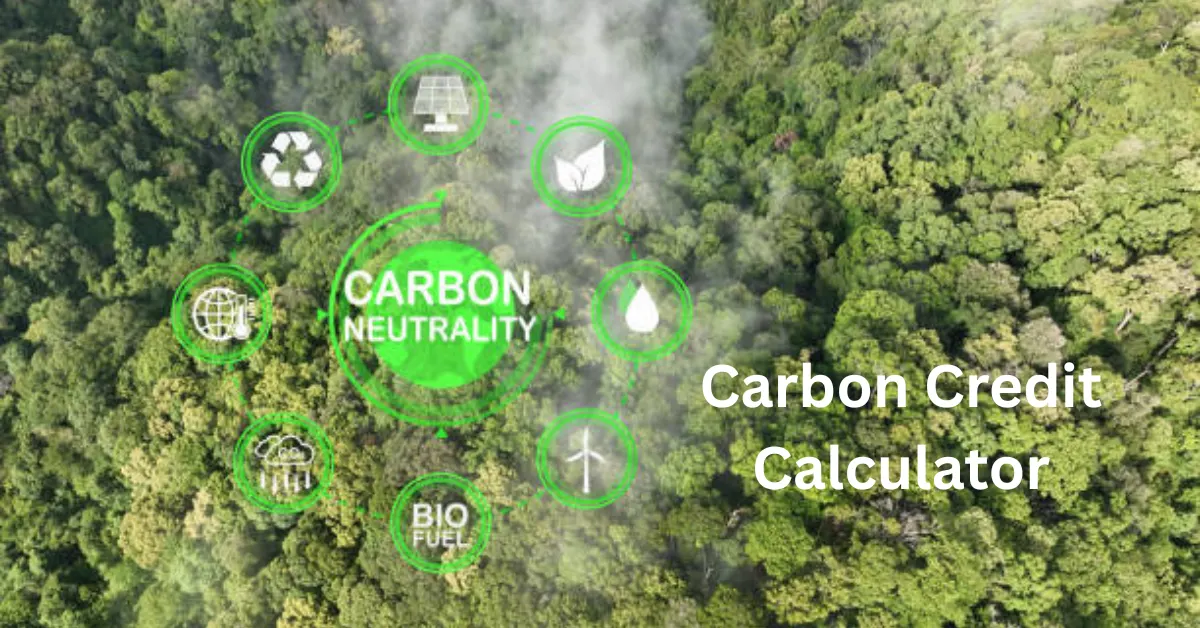
CARBON CREDITS: MARKET MECHANISMS FOR CLIMATE ACTION
We do not inherit the Earth from our ancestors; we borrow it from our children. The carbon credits system is one attempt to ensure we return it in good condition.
Introduction
Climate change represents one of the most formidable challenges confronting humanity in the twenty-first century. Rising global temperatures, melting glaciers, extreme weather events, and ecosystem disruptions threaten sustainable development and human survival. The concentration of greenhouse gases (GHGs), particularly carbon dioxide, in the atmosphere has reached unprecedented levels—crossing 420 parts per million—primarily due to anthropogenic activities including fossil fuel combustion, deforestation, and industrial processes. Addressing this crisis demands urgent, coordinated global action involving mitigation, adaptation, and innovative policy instruments.
Carbon credits have emerged as a market-based mechanism to incentivize emission reductions and facilitate climate action. The concept is elegantly simple yet operationally complex: entities that reduce emissions below established baselines or remove carbon from the atmosphere generate credits that can be traded to those exceeding emission limits. This creates economic incentives for cleaner technologies, renewable energy adoption, afforestation, and sustainable practices while imposing costs on pollution. Carbon credits represent the commodification of atmospheric capacity, transforming an environmental imperative into an economic transaction. However, their effectiveness, equity implications, and actual contribution to emission reductions remain subjects of intense debate and scrutiny.
Understanding Carbon Credits: Conceptual Framework and Mechanisms
A carbon credit represents the right to emit one tonne of carbon dioxide equivalent (CO2e). The concept emerged from the recognition that climate change is a global problem requiring flexible, cost-effective solutions. Since greenhouse gases mix uniformly in the atmosphere regardless of emission source, reducing emissions anywhere provides global benefits. This fungibility enables trading—entities finding it expensive to reduce emissions can purchase credits from those achieving reductions at lower costs, theoretically minimizing overall abatement costs while achieving emission targets.
Two primary carbon markets exist: compliance markets and voluntary markets. Compliance markets, also termed mandatory or regulatory markets, operate under governmental regulations requiring entities to meet emission reduction targets. The European Union Emissions Trading System (EU ETS), established in 2005, is the world2019;s largest compliance market, covering approximately 40% of EU emissions across power generation, industrial sectors, and aviation. Other compliance markets include California2019;s cap-and-trade program, China2019;s national emissions trading scheme launched in 2021, and regional initiatives in various jurisdictions.
Voluntary carbon markets allow companies, organizations, and individuals to purchase credits to offset emissions voluntarily, often driven by corporate social responsibility, stakeholder pressure, or anticipation of future regulations. These markets are smaller but growing rapidly, with credits generated through projects like renewable energy installations, forest conservation, methane capture from landfills, and agricultural practices improving soil carbon sequestration.
The Kyoto Protocol, adopted in 1997 and entering force in 2005, established international carbon credit mechanisms. The Clean Development Mechanism (CDM) enabled developed countries (Annex I parties) to invest in emission reduction projects in developing countries, generating Certified Emission Reductions (CERs) that could be used to meet their commitments. Joint Implementation (JI) allowed developed countries to earn Emission Reduction Units (ERUs) through projects in other developed countries. India has been a significant participant in CDM, hosting thousands of projects in renewable energy, energy efficiency, and industrial processes, generating substantial CERs.
The Paris Agreement of 2015 introduced Article 6, establishing cooperative approaches for countries to achieve their Nationally Determined Contributions (NDCs) through internationally transferred mitigation outcomes. Article 6.2 enables bilateral or multilateral carbon trading between countries, while Article 6.4 creates a new mechanism replacing CDM. The rulebook for Article 6 was finalized at COP26 in Glasgow (2021), though implementation challenges persist. This framework aims to prevent double counting, ensure environmental integrity, and contribute to overall emission reductions beyond mere offsetting.
Economic Rationale: Efficiency, Innovation, and Market Dynamics
The economic logic underpinning carbon credits derives from environmental economics, particularly the concept of externalities. Greenhouse gas emissions constitute negative externalities—costs imposed on society (through climate change impacts) not borne by emitters. Carbon pricing through credits or taxes internalizes these externalities, making polluters pay for environmental damage. This aligns private costs with social costs, correcting market failures and promoting economically efficient emission reductions.
Carbon markets, theoretically, minimize abatement costs through the equimarginal principle—reductions occur where marginal costs are lowest. Industries or countries with expensive abatement options purchase credits from those with cheaper alternatives, achieving aggregate emission targets at minimum cost. For instance, retrofitting an old coal plant with carbon capture technology might cost $100 per tonne reduced, while supporting a wind farm might cost $20 per tonne avoided. Trading enables the wind farm investment, achieving greater emission reductions per dollar spent.
Carbon pricing stimulates innovation by creating financial incentives for developing cleaner technologies and processes. Companies invest in research and development to reduce emissions, gaining competitive advantages through lower compliance costs or credit sales. Renewable energy technologies—solar, wind, hydroelectric—have benefited from carbon finance, accelerating deployment and cost reductions. Energy efficiency improvements, electric vehicle development, and carbon capture technologies receive impetus from carbon markets.
Furthermore, carbon credits facilitate international cooperation and technology transfer. Developed countries investing in developing country projects through CDM or Article 6 mechanisms transfer capital and technology, supporting sustainable development while generating credits. This addresses the common but differentiated responsibilities principle, recognizing historical emissions primarily from developed nations while enabling global participation in mitigation.
Revenue generation from carbon credit sales provides developing countries resources for climate action and development priorities. Countries like India and China have generated billions through CDM projects, supporting renewable energy expansion, industrial modernization, and rural electrification. Small island developing states and least developed countries, though minimal emitters, can benefit from forest conservation and afforestation projects generating credits.
India2019;s Engagement with Carbon Credits: Opportunities and Strategic Positioning
India has been actively engaged with carbon markets, particularly through the Clean Development Mechanism. As of the CDM2019;s operational peak, India hosted over 1,700 registered projects, second only to China, across sectors including renewable energy (wind, solar, small hydro), energy efficiency, waste management, and industrial processes. These projects generated hundreds of millions of CERs, earning substantial foreign exchange while contributing to emission reductions and sustainable development. Indian companies like Suzlon Energy, Tata Power, and various industrial groups participated extensively.
India2019;s approach to carbon credits balances developmental needs with climate commitments. The country has consistently advocated for equity in climate negotiations, emphasizing historical responsibility, per capita emissions, and the right to development. India2019;s per capita emissions remain significantly below the global average and far lower than developed countries, yet the country faces pressure to reduce emissions due to its large absolute emissions—ranking third globally after China and the United States.
At COP26 in Glasgow, Prime Minister Narendra Modi announced India2019;s ambitious climate targets, termed 2018;Panchamrit2019; (five nectars): achieving 500 GW non-fossil fuel energy capacity by 2030, meeting 50% of energy requirements from renewable sources, reducing total projected carbon emissions by one billion tonnes by 2030, reducing carbon intensity of the economy by 45% by 2030, and achieving net-zero emissions by 2070. These commitments create substantial demand for climate finance, where carbon credits can play a significant role.
India launched the Carbon Credit Trading Scheme (CCTS) in 2023 under the Energy Conservation (Amendment) Act 2022, establishing a domestic carbon market. The scheme initially covers energy-intensive sectors including aluminum, cement, iron and steel, pulp and paper, fertilizer, and thermal power plants. The Bureau of Energy Efficiency administers the scheme, setting emission intensity targets for obligated entities. Those exceeding targets must purchase carbon credit certificates from entities achieving surplus reductions, creating domestic price signals for emission reductions.
India2019;s vast potential for generating carbon credits includes renewable energy expansion (solar, wind, hydroelectric), afforestation and reforestation under initiatives like Green India Mission, agricultural practices improving soil carbon, methane capture from waste management, and industrial energy efficiency improvements. The country2019;s biodiversity and forest resources offer opportunities for REDD+ (Reducing Emissions from Deforestation and Forest Degradation) projects. However, monetizing these opportunities requires robust methodologies, monitoring systems, and international market access.
Challenges for India include ensuring carbon credit revenues benefit local communities, particularly tribal populations dependent on forests. Projects must not violate land rights or displace vulnerable groups. Institutional capacity for measurement, reporting, and verification (MRV) of emissions needs strengthening. Navigating international negotiations to secure favorable terms under Article 6, preventing developed countries from using cheap credits to avoid domestic reductions, and ensuring additionality—that credited reductions would not have occurred anyway—are critical concerns.
Criticisms and Controversies: Effectiveness, Equity, and Environmental Integrity
Despite theoretical elegance, carbon credit systems face substantial criticisms questioning their effectiveness and integrity. The fundamental critique concerns whether credits genuinely reduce overall emissions or merely enable continued pollution through offsetting. Critics argue that purchasing credits allows corporations and countries to avoid difficult structural transformations needed for deep decarbonization, creating moral hazard by offering cheap alternatives to genuine emission reductions.
Additionality—demonstrating that credited reductions would not have occurred without the carbon credit incentive—is notoriously difficult to establish. Many CDM projects have been questioned for lacking additionality; for instance, renewable energy projects that would have been economically viable even without carbon revenues. Studies suggest significant portions of CDM credits did not represent genuine additional reductions, undermining environmental effectiveness while generating windfall profits for project developers.
Permanence issues plague forestry and land-use projects. Trees planted for carbon credits may subsequently burn in wildfires, be cut down, or die from pests and diseases, releasing sequestered carbon back to the atmosphere. Climate change itself increases such risks through droughts, temperature extremes, and pest proliferation. Ensuring permanence over decades or centuries presents practical and institutional challenges, particularly in contexts with weak governance, land conflicts, or political instability.
Leakage occurs when emission reductions in one location cause increases elsewhere. Protecting forests in one area may shift logging to unprotected areas. Industrial emission reductions in regulated sectors might increase production and emissions in unregulated sectors or regions. Comprehensive accounting and baseline methodologies attempt to address leakage, but perfect measurement is impossible.
Equity concerns arise regarding distributional impacts. Carbon prices, whether through credits or taxes, can be regressive, disproportionately affecting low-income households spending larger portions of income on energy and transportation. In developing countries, carbon projects may appropriate community lands, displace indigenous peoples, or benefit elites while excluding local populations from decision-making and benefits. Ensuring free, prior, and informed consent, benefit-sharing mechanisms, and safeguards against human rights violations are essential but often inadequately implemented.
Market volatility and price instability affect carbon credit effectiveness. Prices in voluntary markets vary enormously based on project type, location, and certification standards, ranging from less than $1 to over $50 per tonne. Such volatility creates uncertainty, complicating investment decisions and potentially undermining long-term climate planning. Compliance markets experience price fluctuations due to regulatory changes, economic conditions, and political factors. The EU ETS experienced crashes when excess allowances flooded the market, depressing prices and reducing emission reduction incentives.
Greenwashing represents another concern. Companies purchasing cheap, questionable credits claim carbon neutrality while continuing business-as-usual emissions, misleading consumers and stakeholders. Airlines, oil companies, and various corporations have faced accusations of greenwashing through dubious offset claims. Without stringent standards, transparency, and accountability, carbon credits risk becoming public relations tools rather than genuine climate solutions.
Strengthening Carbon Credit Systems: Reforms for Integrity and Effectiveness
Addressing criticisms requires comprehensive reforms enhancing environmental integrity, equity, and transparency. Strengthening additionality criteria through rigorous baseline methodologies, conservative crediting approaches, and periodic reassessment ensures that credits represent genuine reductions. Independent third-party verification, regular audits, and satellite monitoring technologies improve measurement accuracy and detect fraud.
Addressing permanence in forestry projects requires buffer pools—setting aside portions of credits as insurance against reversals—long-term monitoring commitments, and legal frameworks ensuring continued forest protection. Innovative financial instruments like forest bonds and payments for ecosystem services can provide sustained funding for conservation beyond initial credit sales. Integrating indigenous and local community land rights, traditional knowledge, and management practices enhances both permanence and equity.
Standardization and quality assurance across carbon markets prevent a race to the bottom where low-quality credits undermine high-quality ones. Certification standards like Gold Standard, Verified Carbon Standard (Verra), and Climate Action Reserve establish credibility criteria. However, proliferation of standards creates complexity. Harmonizing methodologies, establishing international quality benchmarks, and ensuring mutual recognition facilitate market functioning while maintaining integrity.
Transparency through digital technologies including blockchain can enhance carbon credit markets. Blockchain-based registries enable transparent tracking of credit issuance, transfers, and retirement, preventing double counting and fraud. Digital MRV systems using satellite imagery, IoT sensors, and artificial intelligence improve accuracy while reducing costs. Countries like Singapore are exploring blockchain for carbon credit trading.
Ensuring equity requires inclusive governance, benefit-sharing mechanisms, and safeguards. Carbon projects must respect land rights, obtain free prior informed consent from affected communities, and ensure that local populations—particularly indigenous peoples—receive fair shares of revenues. Co-benefits beyond carbon—biodiversity conservation, watershed protection, livelihood improvements, health benefits—should be recognized and rewarded. Safeguard policies addressing social and environmental risks must be rigorously enforced.
Carbon pricing must be set at levels reflecting the true social cost of carbon—estimated at $50-100 per tonne or higher—to drive meaningful behavioral change and investment in clean technologies. Current prices in many markets remain too low to incentivize deep decarbonization. Price floors, allowance reserves, and auction mechanisms can stabilize markets and prevent price crashes. Linking carbon markets internationally, while ensuring environmental integrity and preventing carbon leakage, expands liquidity and cost-effectiveness.
Complementing carbon credits with regulatory measures—renewable energy mandates, energy efficiency standards, fossil fuel subsidy removal, and technology-specific support—addresses limitations of market mechanisms alone. Carbon credits work best as part of comprehensive climate policy portfolios combining market instruments with regulations, investments, and behavioral interventions.
Beyond Offsetting: Carbon Credits in Net-Zero Transition
As countries and corporations commit to net-zero emissions by mid-century, the role of carbon credits is evolving. Net-zero targets require reducing emissions as close to zero as possible, with residual emissions balanced by carbon removal. This shifts emphasis from offsetting—purchasing credits to compensate for ongoing emissions—toward genuine reductions and durable carbon removal.
High-integrity net-zero pathways prioritize deep emission cuts across energy systems, transportation, industry, agriculture, and buildings. Carbon credits, in this framework, address hard-to-abate sectors like aviation, shipping, and certain industrial processes where technological alternatives are limited or extremely expensive. Credits should represent high-quality removals—afforestation with permanence guarantees, bioenergy with carbon capture and storage (BECCS), direct air capture, enhanced weathering, or ocean-based approaches—rather than avoided emissions that might have been prevented anyway.
The Science Based Targets initiative (SBTi), guiding corporate climate commitments, distinguishes between value chain mitigation (reducing emissions throughout operations and supply chains) and neutralization (balancing residual emissions with removals). Companies are expected to prioritize value chain reductions, using offsets sparingly for unavoidable emissions. This prevents offsetting from substituting for necessary structural transformations.
Carbon removal technologies are gaining prominence but face challenges. Nature-based solutions like afforestation and soil carbon sequestration offer co-benefits but have permanence and scalability limits. Technological removals like direct air capture are currently expensive, energy-intensive, and deployed at small scales. Substantial research, development, and investment are needed to scale carbon removal, with carbon credits potentially financing this transition.
International cooperation under Article 6 can accelerate the net-zero transition if designed properly. Countries with greater mitigation potential or lower costs can support climate action globally while generating revenues. However, safeguards preventing developed countries from achieving targets solely through cheap international credits, thereby avoiding domestic action, are essential. Corresponding adjustments—accounting procedures preventing double counting when credits transfer between countries—ensure environmental integrity.
Global Perspectives: Comparative Approaches and Lessons
Different jurisdictions have adopted varied approaches to carbon pricing and credits, offering comparative insights. The European Union2019;s ETS, despite initial challenges including overallocation and price volatility, has evolved through reforms including reducing allowance caps, establishing price stability mechanisms, and extending sectoral coverage. The EU is implementing Carbon Border Adjustment Mechanism (CBAM) to prevent carbon leakage by imposing charges on imports from countries with weaker climate policies, raising questions about trade implications and equity.
China launched the world2019;s largest emissions trading system in 2021, initially covering only the power sector but planned for expansion. Given China2019;s status as the world2019;s largest emitter, the effectiveness of this system has global significance. Early observations suggest conservative caps and price levels that may need strengthening to drive substantial reductions.
New Zealand2019;s ETS includes forestry, creating incentives for afforestation but raising concerns about land-use changes and indigenous Maori land rights. The inclusion of agriculture, given New Zealand2019;s significant agricultural emissions, has been contentious, illustrating political challenges of comprehensive coverage.
Developing countries face particular challenges. Limited institutional capacity, data gaps, corruption risks, and competing development priorities complicate implementation. International support through climate finance, technology transfer, and capacity building under frameworks like Green Climate Fund is essential. However, climate finance remains inadequate relative to needs, with developed countries failing to meet the $100 billion annual commitment.
Small island developing states and least developed countries, contributing minimally to emissions yet facing severe climate impacts, require special consideration. Carbon credit revenues from forest conservation, renewable energy, and blue carbon (coastal ecosystem) projects offer development finance. However, ensuring these countries benefit fairly from carbon markets, rather than being exploited for cheap credits, demands equitable international frameworks.
Future Outlook: Evolving Role in Climate Governance
The future of carbon credits depends on addressing current shortcomings while adapting to evolving climate imperatives. As emission reduction targets tighten and net-zero commitments proliferate, demand for high-quality credits will likely increase, potentially driving prices upward and improving project economics. However, this also risks creating incentives for questionable credits if quality controls are inadequate.
Technological innovations in monitoring, verification, and carbon removal will shape carbon markets. Satellite monitoring, machine learning algorithms analyzing emissions data, and blockchain-based trading platforms enhance transparency and efficiency. Carbon removal technologies, as costs decline and deployment scales, may constitute larger portions of credit supply, offering more durable climate solutions than avoided emissions.
Integration of carbon markets with broader sustainability goals—UN Sustainable Development Goals—can enhance legitimacy and impact. Projects delivering co-benefits including poverty reduction, health improvements, biodiversity conservation, and gender equity warrant premium pricing, incentivizing holistic approaches rather than narrow carbon focus.
The role of voluntary markets is evolving. Corporate net-zero commitments are driving demand, but increasing scrutiny demands higher standards. Voluntary markets may converge with compliance markets as more jurisdictions implement carbon pricing, or differentiate by focusing on beyond-compliance ambition and co-benefits.
International negotiations continue refining Article 6 implementation, addressing technical details around corresponding adjustments, baselines, and monitoring. Success requires balancing environmental integrity with development needs, preventing carbon markets from becoming mechanisms for developed countries to avoid domestic action while ensuring developing countries benefit fairly.
Ultimately, carbon credits are tools, not solutions. Their effectiveness depends on design, implementation, governance, and integration within comprehensive climate strategies. They can accelerate emission reductions and mobilize finance, but cannot substitute for fundamental transformations in energy systems, consumption patterns, and economic structures necessary for climate stabilization.
Conclusion
Carbon credits represent an innovative attempt to harness market forces for environmental protection, translating the abstract challenge of climate change into concrete economic transactions. By placing a price on carbon, these mechanisms create financial incentives for emission reductions, stimulate clean technology innovation, and facilitate international cooperation. India and other developing countries can potentially benefit through revenue generation, technology transfer, and sustainable development while contributing to global climate goals.
However, the reality of carbon credits has fallen short of theoretical promise in important respects. Concerns about additionality, permanence, leakage, and equity persist. Instances of greenwashing, market volatility, and low-quality credits undermine credibility and effectiveness. Carbon markets have not prevented global emissions from continuing to rise, though they may have slowed growth relative to counterfactual scenarios. The fundamental question remains: do carbon credits enable genuine transformation or merely provide convenient excuses for continued pollution?
The answer is nuanced. Carbon credits, properly designed with robust standards, transparent monitoring, equitable benefit-sharing, and integration within comprehensive climate policies, can contribute meaningfully to emission reductions. They offer cost-effective pathways for climate action, particularly in developing countries where mitigation potential is substantial and costs are lower. They can mobilize private finance, complement public climate funding, and accelerate clean energy transitions.
Yet, carbon credits cannot be the primary solution. Deep decarbonization requires structural transformations—phasing out fossil fuels, shifting to renewable energy, electrifying transportation, improving energy efficiency, transforming agricultural practices, and changing consumption patterns. These transformations demand regulations, investments, behavioral changes, and political will that markets alone cannot generate. Carbon credits work best as complementary instruments within policy portfolios combining market mechanisms, regulations, technological innovation, and international cooperation.
For India, carbon credits offer opportunities aligned with developmental aspirations and climate commitments. The country can leverage its renewable energy potential, forest resources, and technological capabilities to generate credits while reducing emissions. The domestic carbon market can drive industrial efficiency and innovation. International markets can provide climate finance supporting the ambitious targets announced at COP26. However, India must ensure that carbon credit participation does not compromise sovereignty, equity, or long-term development interests. Safeguarding community rights, maintaining policy space for industrial growth, and demanding equitable international frameworks are essential.
Looking ahead, the evolution of carbon markets toward higher integrity, greater transparency, and focus on carbon removal rather than mere offsetting is encouraging. Technological innovations in monitoring and removal technologies, coupled with strengthened governance and international cooperation, can enhance effectiveness. However, vigilance against greenwashing, ensuring equity, and maintaining carbon pricing at levels reflecting true climate costs remain ongoing challenges.
In conclusion, carbon credits embody both the potential and limitations of market-based environmental governance. They demonstrate humanity2019;s capacity for innovative problem-solving and international cooperation, yet also reveal how economic instruments can be manipulated, compromised, or rendered ineffective without strong institutions and political commitment. As the climate crisis intensifies, carbon credits will likely remain part of the response toolkit. Their ultimate contribution to climate stabilization depends not on the elegance of economic theory but on the messy realities of implementation—the integrity of standards, effectiveness of monitoring, equity of distribution, and political will to prioritize planetary health over short-term economic interests. The carbon credit system, like the broader climate challenge, is a test of whether humanity can collectively organize to address existential threats, or whether we will continue making incremental adjustments while the crisis deepens. The answer remains to be written through the decisions and actions of governments, businesses, communities, and individuals in the critical years ahead.
Go to Home Page
Go to UPSC Govt. Site